Creator Deliverables Tracker for Brand Deals (2026)
A per deliverable tracker with draft, revision, approval, publish date and live link rows plus handoff points for won deals.
 Written by Jack Evans6 min read

A creator deliverables tracker is a per deal sheet that follows every deliverable from draft through revisions, approval, publish date and live link. Give each deliverable one row, one owner and one next date, and mark handoff points where drafts move between creator and brand. Rows with owners ship. Rows without owners drift.
On this page
- Why do deliverables slip after the brand says yes?
- What should a creator deliverables tracker include?
- How do you run the tracker week to week?
- How do you run content approval without bottlenecks?
- Which mistakes break a deliverables tracker?
- What are the key takeaways?
- How does The Creator List workspace replace tracker admin?
A creator deliverables tracker is a per deal sheet that follows every deliverable from draft through revisions, approval, publish date and live link. Give each deliverable one row, one owner and one next date, and mark handoff points where drafts move between creator and brand. Rows with owners ship. Rows without owners drift.
Why do deliverables slip after the brand says yes?
The yes covers the deal. Delivery covers a dozen smaller promises inside it: drafts on dates, feedback in rounds, approvals before posting, links after posting. Each promise is a handoff between two busy people, and every handoff without an owner is a stall waiting to happen.
In 2026, delivery volume keeps rising while admin stays manual. Solo operators run three to six deliverables per deal across multiple brands, each with its own draft date, revision count and posting window. Memory cannot hold thirty moving dates. A per deliverable sheet can, because every row carries exactly one next date.
The money leak is documented. A survey reported by Business Insider found that 87% of creators had been paid late, paid the wrong amount, or not paid at all, and stalled delivery sits behind much of it: no approval date means no posting date, which means no invoice date. Delivery rows drive payment rows across the 30 to 90 day terms that Digiday reports as standard.
What should a creator deliverables tracker include?
One row per deliverable, seven columns, zero decoration. Copy this layout for every won deal.
- Deliverable. Exact format, platform, length, due date. Example: Reel 9:16 30 to 45 seconds, draft due 2 Oct.
- Draft status. Not started, filming, editing, sent. Statuses move one way. A row that moves backward signals a reshoot to price.
- Revisions. Rounds used against rounds agreed. Example: 1 of 2 used. The contract template sets the cap this column enforces.
- Approval. Pending, approved with date, changes requested. Nothing posts on pending. The approval date starts the posting clock.
- Publish date and live link. Posting date plus URL once live. Links are the proof that invoices and renewals point at later.
- Owner and next date. Who moves the row next, and by when. Creator or brand contact, one name, one date. Rows with owners ship.
A filled row looks like this: Reel 9:16, draft sent 2 Oct, 1 of 2 revisions used, approved 3 Oct, posts 5 Oct, owner Mei for feedback by 3 Oct. Six facts, one owner, one date.
How do you run the tracker week to week?
Four habits turn the sheet into a system. Each takes minutes and prevents a stall.
- Open rows at signing. Copy the signed deliverable list into rows the day the deal signs. Rows mirror the agreement exactly, so extras stand out as new lines without terms.
- Move owners at every handoff. Draft sent means owner flips to the brand with a feedback date. Feedback returned means owner flips back with a revision date. The flip is the system: work never sits with no name on it.
- Review by next date weekly. Fifteen minutes, same slot, sorted by next date. Act on the top three rows, chase the overdue owner, close the finished ones.
- Close rows deliberately. Live link recorded plus invoice sent plus usage logged means the row archives. The archive becomes rate history, and repeat brands become visible for the retainer pitch at sign-off.
Michael Collins (@bigchunkks) stacks multiple deliverables per brand across his challenge formats: 61.5K followers, 733K average views on his best-performing posts and a single reel past 9.7M views, and formats that repeat brand after brand. Those deals only ship on time with a named owner per row.
How do you run content approval without bottlenecks?
Four stages, one owner at a time:
- Draft sent. The creator sends the draft and the owner flips to the brand with a feedback date. Agree the feedback window at signing, for example two working days per draft, so reviews do not stall the posting clock.
- Revisions capped at two. Brand feedback arrives as one consolidated message per round. Two rounds are included per deliverable and extras are priced at S$150 (about US$120) per additional round, so round three is a new line to price, not a favour to absorb.
- Approval with date. Nothing posts on pending. Record approved with the date, which starts the posting clock and protects the post against takedown requests.
- Publish then sign-off. Post on the agreed date, paste the live link the day it posts, then send the invoice. Sign-off gates the invoice: no recorded approval date and live link means no invoice yet.
Extra requests raised during approval become new rows without agreed terms under the scope creep guide.
Which mistakes break a deliverables tracker?
- Tracking deals instead of deliverables. One row per deal hides which video stalls. One row per deliverable shows it.
- No named owner. Rows owned by everyone are owned by no one. Every row carries one name and one next date.
- Vague deliverable text. Content for launch cannot be drafted, approved or invoiced. Counts, formats and dates can.
- Skipping the approval column. Posting without recorded approval invites takedown requests. Approved with a date protects the post.
- Missing live links. Links recorded late mean invoices sent late and renewals never quoted. Paste the URL the day it posts.
- Mixing pitches with signed work. Pitch rows bury delivery deadlines under maybe work. Won deals only, tracked beside the deal tracking method.
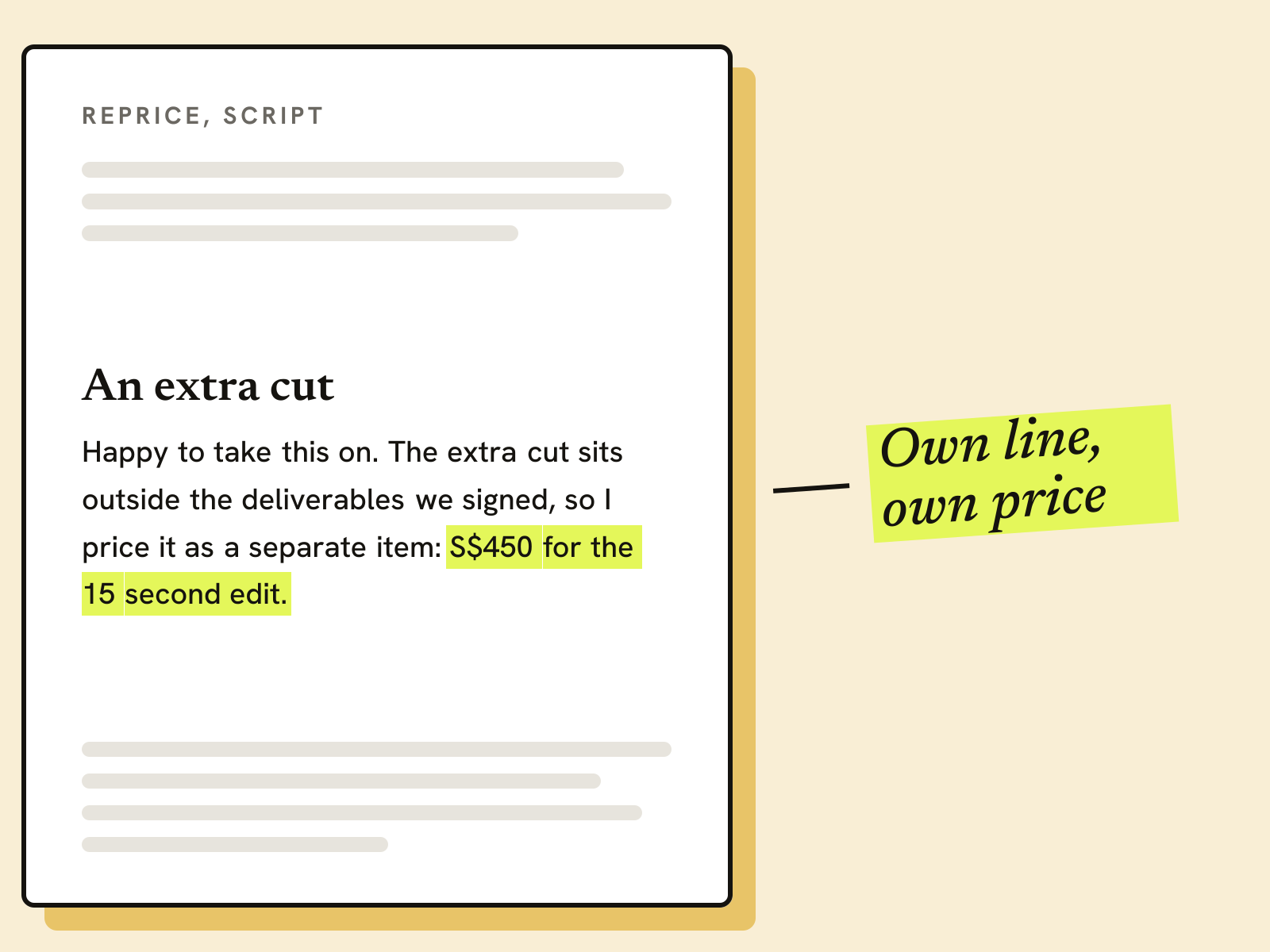
- Absorbing extras silently. A fourth Story beside three signed rows is a new line to price. The scope creep guide scripts the reprice before the extra work films.

More deals. Less admin. Paid on time.
Every deal on one page, invoices out on time, reminders written for you.
First deal not invoiced in 30 days? The founders sit with you until it is.
Try it free on your next deal14-day free trial · Cancel any time · We never take a commission
What are the key takeaways?
- Track deliverables, not deals: one row per video, story or post.
- Give every row an owner and one next date.
- Flip the owner at every handoff between creator and brand.
- Record approvals with dates before anything posts.
- Paste live links the day they post for invoices and renewals.
- Review by next date weekly and archive closed rows.
A clean tracker habit looks like this: Monday review, top three rows moved, overdue owners chased, finished rows archived. Fifteen minutes that protect every fee and licence in the pipeline.
How does The Creator List workspace replace tracker admin?
The tracker describes a workflow: capture, brief, contract, delivery, sign-off. When milestones, drafts and approvals share one roof, the rows update themselves.
The Creator List is a private workspace for the brand deals you already have. Paste or forward the brief and it splits into the real pieces of work, with Milestones for what is due when. The client reviews video, images, carousels and Story sets with pinned notes, approves in one click, and the dashboard's Needs you list shows what is waiting on you. The invoice follows your country's rules, emailed from the app, with payment reminder drafts you send yourself. It isn't a marketplace. We don't find work or introduce you to brands, and the money goes straight between you and your client, with no fee on what they pay you.
When the brief names the deliverables, revisions and usage rights, you can answer the next request from the same set of terms, which is what the wider creator tools stack is for. It starts with a 14-day free trial that covers one real deal, then a monthly plan; see pricing. If you would rather manage won deals where the draft, the approval and the invoice share one roof, create your account. If you prefer the manual route, keep this tracker and the guides hub beside it.
Common questions
A creator deliverables tracker is a per deal sheet that follows every deliverable from draft through revisions, approval, publish date and live link. Each deliverable gets one row with an owner and a next date, so nothing stalls between handoff points.
A deliverables tracker needs one row per deliverable with format and due date, draft status, revision rounds used, approval state, publish date, live link, and the current owner. Each row ends with a next date, so the weekly review always knows what moves today.
A handoff point in a brand deal is any moment work moves between creator and brand: draft sent, feedback returned, approval given, invoice issued. Each handoff names an owner and a date, because work without a named owner waits while both sides assume the other is moving.
Trackers stop scope creep by mirroring the signed deliverable list exactly, so extra requests stand out as new rows without agreed terms. A fourth Story request beside three signed Stories is visibly a new line to price, not a favour to absorb.
A creator should close a deliverable row when the post is live with the link recorded, the invoice is sent, and the usage window is logged. Closed rows move to an archive tab that becomes rate history and repeat brand evidence for the next negotiation.
Run content approval in four stages with one owner at a time: draft sent with a feedback date, revisions capped at two rounds with extras priced at S$150 (about US$120) per additional round, approval recorded with a date before anything posts, then publish with the live link pasted the same day. Agree a feedback window at signing, for example two working days per draft, and let sign-off gate the invoice.
More deals. Less admin. Paid on time.
Every deal on one page, invoices out on time, reminders written for you.
First deal not invoiced in 30 days? The founders sit with you until it is.
Try it free on your next deal14-day free trial · Cancel any time · We never take a commission
Read next
 How to Handle Scope Creep in Brand Deals (2026 Guide)A creator-side guide to defining deal scope, spotting the five creep patterns early, and repricing extras politely without burning the relationship.
 Turning Brand Deals Into Retainers: Creator Guide 2026A creator guide to converting won deals into monthly retainers with packaging, pricing, renewal terms and a word for word ask script.
 How to Keep Track of Brand Deals (Without Losing Payments)A one-row-per-deal system for won brand deals: deliverables, waiting-on, payment status and usage-rights expiry, reviewed weekly so nothing slips.
 Notion Alternatives for Creators: 6 Honest Picks (2026)Honest Notion alternatives for creators running won brand deals: what spreadsheets, Notion, boards and a creator workspace each handle, and which to pick.