Influencer Media Kit Template for Creators (2026 Guide)
A two page influencer media kit template with demographics, engagement proof, past work, rates and usage terms for won deals.
 Written by Jack Evans5 min read

An influencer media kit template is a two page proof sheet a creator sends after a brand says yes: audience demographics, engagement quality, past work with results, rates and usage terms. Lead with engagement over followers, show one result per past deal, and date every figure. The kit turns a yes into a package choice.
On this page
An influencer media kit template is a two page proof sheet a creator sends after a brand says yes: audience demographics, engagement quality, past work with results, rates and usage terms. Lead with engagement over followers, show one result per past deal, and date every figure. The kit turns a yes into a package choice.
Why does a media kit close won deals faster?
The yes is emotional. The package choice is rational. Between them sits a brand contact who must sell the creator internally to a manager holding budget. A two page kit gives that contact everything for the internal pitch: who watches, whether they act, what it costs, what past deals delivered.
In 2026, follower counts impress while engagement converts. Brands burned by inflated reach now ask for saves, shares and average views before signing. A kit that leads with engagement quality answers the vetting question before it is asked, and dated screenshots make the proof checkable instead of claimed.
Weak proof is the documented leak. A survey reported by Business Insider found that 87% of creators had been paid late, paid the wrong amount, or not paid at all, and vague agreements sit behind most of it. Kits that attach rates and usage terms to proof get signed fast. Kits that show vanity numbers renegotiate for months across the 30 to 90 day payment windows that Digiday reports as standard.
What should an influencer media kit template include?
Six blocks build the two pages. Copy them in order, fill the brackets, date the footer.
- Positioning line. One sentence: niche, format, proof. Example: Slow morning ASMR skincare and honest k-beauty GRWM, 1.2M top view.
- Audience demographics. Age split, location split, platform split with screenshots. Example: [age split], [location split], TikTok plus Instagram. Demographics sell fit, which is what briefing stage buyers actually purchase.
- Engagement quality. Average views, top three posts, saves and shares where visible. Lead here, not with followers. Engagement over reach is the whole argument, and the kit is where it wins.
- Past work with results. Three deals, one result each. Example: [Brand] [format], [views], [saves]; [Brand] launch, [views], [business outcome]. Results beat logos. One number per deal beats a wall of brand names.
- Rates and packages. Starting figures plus package tiers. Example: packages from S$900 (about US$700) per video plus licensing. The full creator rate card follows at briefing with usage windows attached.
- Usage terms summary. Licence windows in one line each. Example: 12 month organic included, 90 day Spark Ads from S$450 (about US$350). The usage rights guide carries the full ladder these rows summarise.
This template comes from an aggregate of how every creator on our roster actually runs their workflow, brief through invoice, rather than one person's kit. Kelicia Ong (@kelifries) is the clearest example of the principle: 18.3K followers, a top TikTok at 1.2M views, about 66 times her follower count. It leads with engagement before followers, top results and save counts first, audience fit second. Once the proof is clear, no buyer asks about the follower count. No past deals yet? UGC portfolio examples and what brands look for shows how to label samples instead.
How do you assemble the kit in one afternoon?
Work down the blocks in order. Each pass fills one section, and the PDF is ready to send when the last screenshot lands.
- Pull the screenshots. Audience demographics, top three posts, saves and shares. Fresh analytics screenshots with dates beat typed claims every time.
- Write the result lines. One number per past deal: views plus the business outcome where you have it. Three deals with results beat ten deals with logos.
- Attach the rates. Starting packages with the validity date. Keep the full menu for the contract template stage, where terms get signed.
- Date and export. Valid until line, PDF under five pages, file name with the month. Dated kits expire gracefully. Undated kits haunt negotiations as screenshots.
Which mistakes break a creator media kit?
- Leading with followers. Follower counts invite reach comparisons the creator loses. Engagement quality wins the deals the creator can fulfil.
- No demographics. Brands buy audience fit. Kits without age and location splits force the buyer to guess, and guesses favour bigger accounts.
- Logos without results. Ten brand logos with zero numbers read as ten free gifts. Three deals with one result each read as a track record.
- Hiding the rates. Kits without figures start every conversation from zero. Starting packages frame the budget before the call.
- Stale screenshots. Last year analytics invite discounting. Quarterly screenshots with dates keep the story current.
- Burying usage terms. Kits that omit licences restart negotiations at contracting. One usage summary line carries the scope creep guide logic forward: extras reprice instead of sliding in free.
What are the key takeaways?
- Send the kit after the brand says yes, before briefing ends.
- Lead with engagement quality, demographics and results, never followers.
- Show three past deals with one result each.
- Attach starting rates with a validity date.
- Summarise usage terms in one line per window.
- Refresh screenshots and figures every quarter.
As an illustrative example rather than a real quote, a clean kit cover reads like this: @kelifries, slow morning skincare GRWM, 1.2M top view, 65% women 18 to 34 in SG plus MY, packages from S$900, valid until 31 Dec 2026. Six facts that turn a yes into a package.

More brand deals, paid what they're worth.
Pitch in your own words, sign before you film, stop doing extras free.
First deal not invoiced in 30 days? The founders sit with you until it is.
Try it free on your next deal14-day free trial · Cancel any time · We never take a commission
How does The Creator List workspace replace kit chaos?
The kit is a snapshot. The workspace is the source it snapshots from: capture, brief, contract, delivery, sign-off. When deliverables, approvals and results share one roof, the next kit writes itself.
The Creator List is a private workspace for the brand deals you already have: bring a deal in, then keep the brief, agreement, drafts, client review, invoice and payment follow-up in one place. Milestones hold the drafts, your client's notes and approvals, so results and posting proof sit beside the deliverables they prove. Invoices go out from the app, with payment reminder drafts you send yourself. Sign-off closes the loop on the deal, and you pull the results into your next kit refresh from your own analytics.
It isn't a marketplace. We don't find work or introduce you to brands, and the money goes straight between you and your client, with no fee on what they pay you. There's a 14-day free trial, then a monthly plan (see pricing). If you would rather manage won deals where the proof, the package and the payment share one roof, create your account. If you prefer the manual route, keep this template and the guides hub beside it. For the money side, a UGC creator invoice template does the job, and the contract template app comparison covers the paperwork.
Common questions
An influencer media kit is a two page proof sheet a creator sends after a brand says yes, showing audience demographics, engagement quality, past work with results, rates and usage terms. The kit turns a verbal yes into a package choice with dated figures.
A creator media kit should include a one line positioning statement, audience demographics with age and location splits, engagement quality with average views and top posts, three past deals with one result each, a rate card summary, and usage terms. Each block answers one brand question: who watches, do they act, and what it costs.
Small creators prove value by leading with engagement quality instead of follower counts: average views, saves, shares, and one top post result per past deal. An account with 18.3K followers and a 1.2M view top post beats a 200K account with flat reach, and the kit is where that comparison wins.
A media kit should include starting rates or package tiers, not a full negotiable menu. One line such as packages from S$900 (about US$700) per video plus licensing frames the budget early, while the full rate card follows at briefing stage with usage windows attached.
Creators should update their media kit every quarter with fresh screenshots, new top posts and current rates. Dated figures with a valid until line keep old PDFs from haunting negotiations, and quarterly proof keeps the engagement story matched to current performance.
More brand deals, paid what they're worth.
Pitch in your own words, sign before you film, stop doing extras free.
First deal not invoiced in 30 days? The founders sit with you until it is.
Try it free on your next deal14-day free trial · Cancel any time · We never take a commission
Read next
 Creator Rate Card Template for UGC Deals (2026 Guide)A creator rate card template that separates content fees from usage licences, with package tiers, S$ benchmarks and negotiation notes.
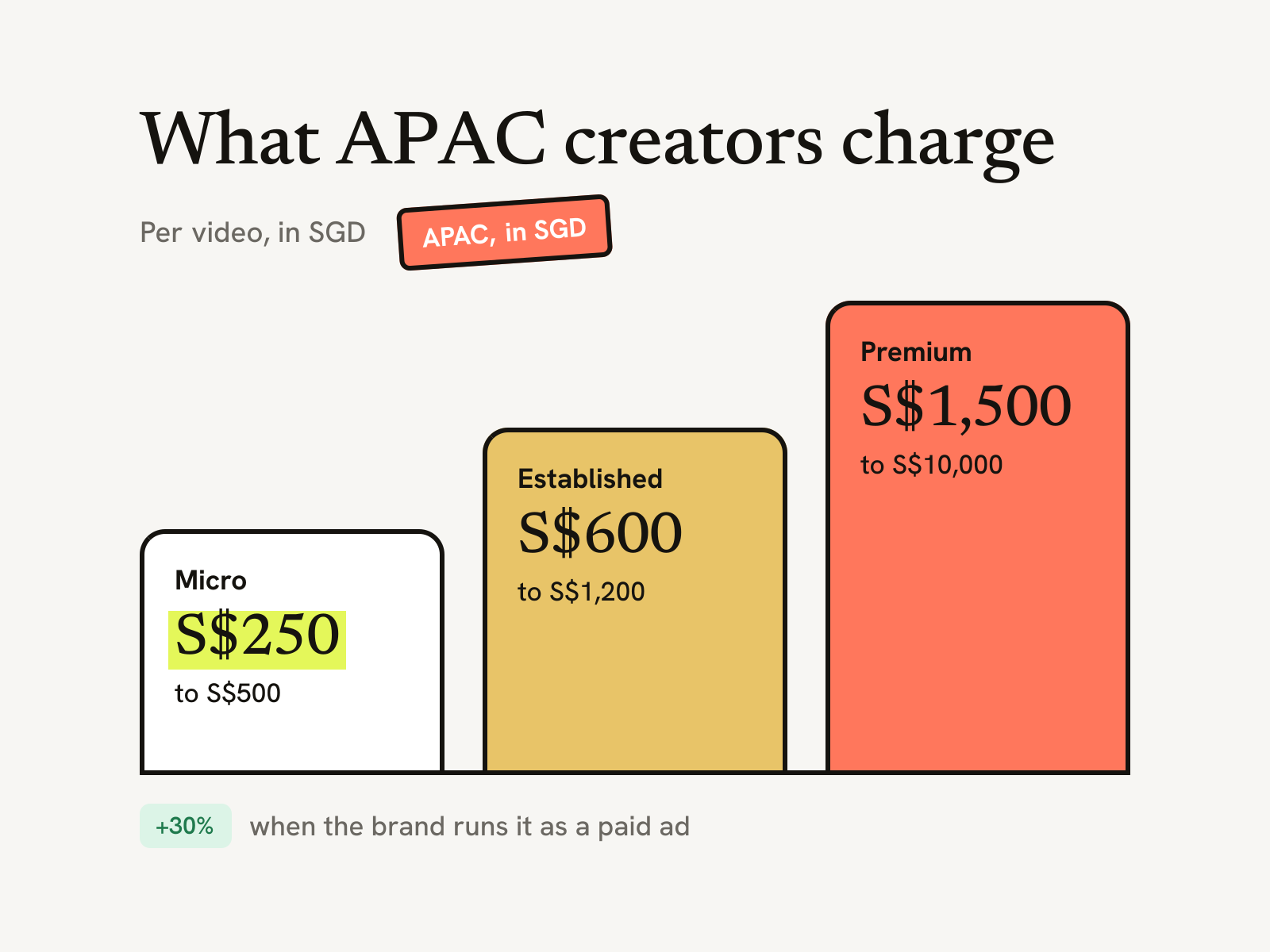 UGC Creator Rates 2026: What APAC Creators ChargeLocal-currency UGC and influencer rate bands across seven APAC markets, the reach versus content distinction that fixes mispriced briefs, and the usage-rights line that inflates budgets.
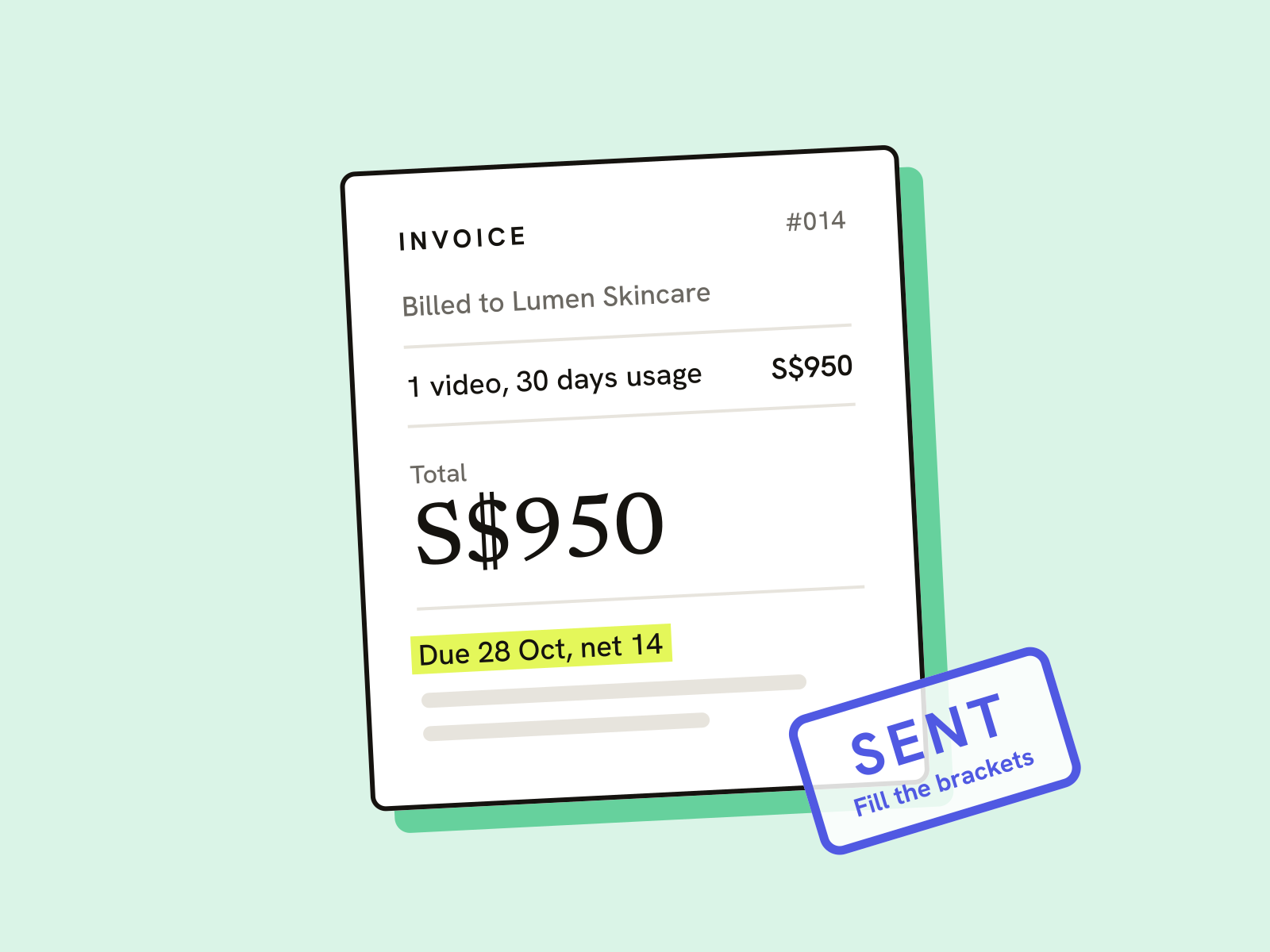 UGC Creator Invoice Template for Creators (2026)A copy ready UGC creator invoice template with editable deliverable, usage rights, payment term and late fee fields, plus how to fill each one.
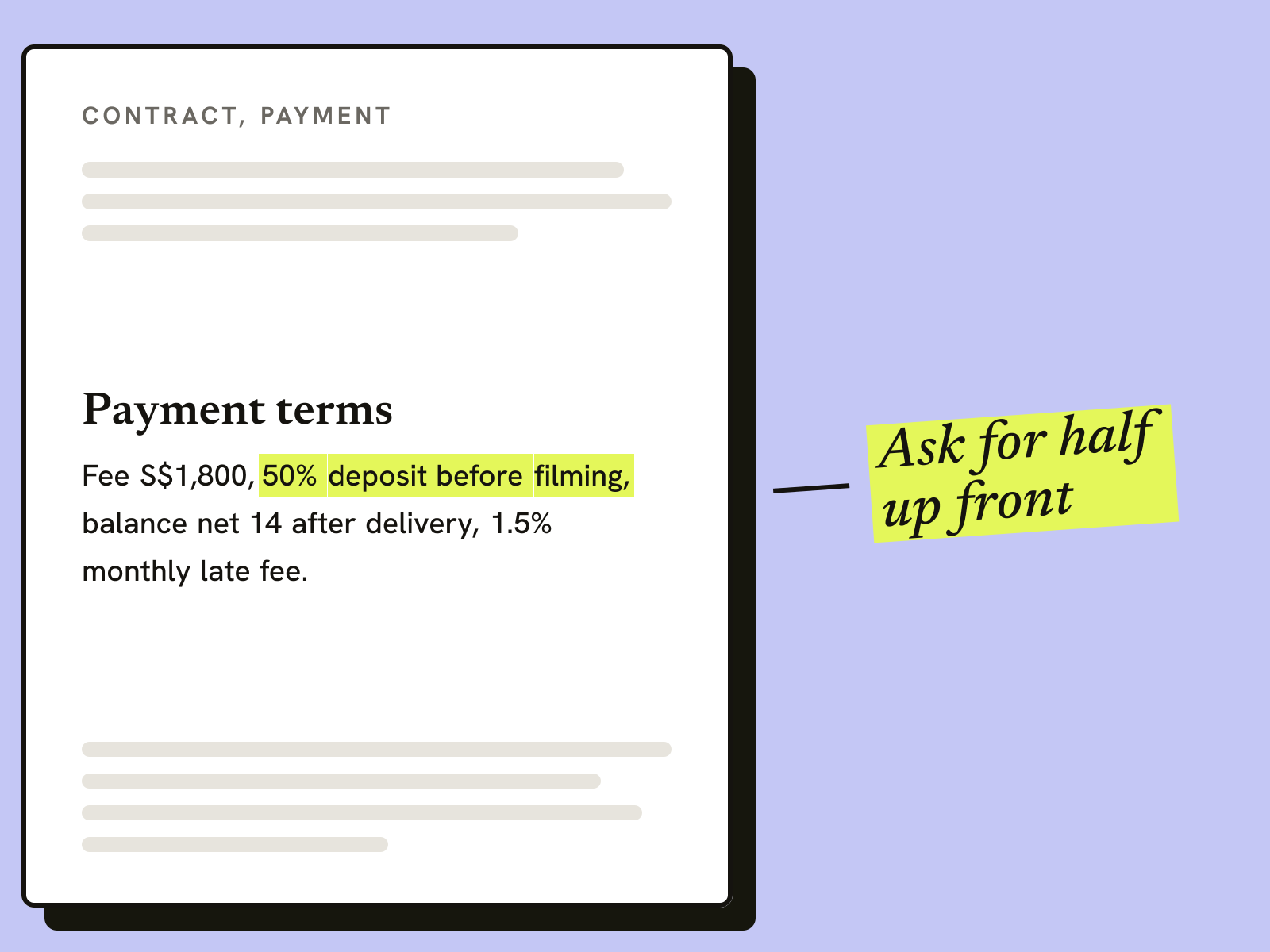 Brand Deal Contract Template for Creators (2026 Guide)A plain language brand deal contract template with six clauses that protect won deals, plus how to fill each field before work starts.