What Should Be in a Brand Brief: A Creator's Checklist
A checklist of the twelve fields a brand brief must answer before you film, and the copyable message that asks for the ones that are missing.
 Written by Jack Evans7 min read

A brand brief should answer twelve things before you film: goal, deliverables, platform, hook, talking points, do's and don'ts, reference, dates, usage rights, revisions, payment and approver. What should be in a brand brief is a checklist. If yours arrived as three bullet points in a DM, the missing fields are the questions you send back.
On this page
A brand brief is the written list of the twelve things you need before you film: the goal, the deliverables, the platform, the hook, the talking points, the do's and don'ts, a reference, the dates, the usage rights, the revisions, the payment and the approver. What should be in a brand brief is a checklist, not a mood board. Most briefs you get arrive as three bullet points in a DM, so the missing fields are the questions you send back.
What should be in a brand brief?
Twelve fields cover almost every deal you will take. Read whatever the brand sent you against this list and tick what is answered before you film.
- The goal. One sentence on what the video should make someone do: click, download, buy, visit, or simply know the product exists.
- The deliverables. How many videos, each length, orientation, aspect ratio, whether captions and thumbnails are included, and the file format they want.
- The platform. Where it runs: TikTok, Reels, YouTube Shorts, their website, or a paid ad. The platform decides the framing and the length.
- The hook direction. What has to happen in the first three seconds, or at least what the first three seconds must achieve.
- The talking points. The two or three things that must be said, in order, plus anything required by law such as a disclosure or a disclaimer.
- The do's and don'ts. Words they will not allow, competitors never to name, claims that are off limits, and the look they want to avoid.
- The reference. At least one video that shows the tone, pacing and energy. One link beats three paragraphs of adjectives.
- The dates. Draft due date, how long review takes, the go-live date, and any campaign date that cannot move.
- The usage rights. Which platforms, how long, organic only or paid ads too, whether they may run it from their own account, and which countries.
- The revisions. How many rounds are included, what counts as a new request rather than a fix, and who is allowed to ask for changes.
- The money. The fee, exactly what it covers, when it is paid, and whether usage, exclusivity, raw footage or extra cuts cost more. If the brand is overseas, name the currency too, and should I charge in USD or local currency explains which one to pick.
- The approver. The named person who gives feedback and the named person who signs off. "The team" is not a person.
If the brand's brief answers all twelve, you can start. Most briefs you receive in your first year answer a handful and leave the rest for you to guess, and guessing is where unpaid work begins.
Why do brands send three bullet points instead of a real brief?
They are not doing it to be difficult, and you are not the first person this has happened to. The largest study on briefing, run by the BetterBriefs Project with more than 1,700 marketers and agency staff across over 70 countries, found that 80% of marketers think they write good briefs while only 10% of agencies agree. The same research puts an estimated 33% of marketing budgets down to poor briefs and misdirected work (The Drum, on the BetterBriefs findings).
The reason the brief is thin is the reason the researchers gave for the gap. Agencies do not push back on briefs that lack objectives, and brands assume the brief landed because nobody said otherwise. You are simply the first person to say what is missing.
Professional agencies get treated the same way. YouGov's survey of UK creative agencies found that only 37% find the briefs they receive useful, and 55% said those briefs lack clear objectives and outcomes (YouGov, December 2021). A three-line DM is therefore normal rather than rude in 2026, and sending questions back is the professional response rather than a sign you are hard to work with.
How do you check a vague brief before you film anything?
Five steps, in order. The whole check takes ten minutes and it is the difference between one take and four.
-
Mark the blanks, not the flaws. Go down the twelve fields and tick what the brand actually answered. Do not argue about the wording of the brief. The list exists to tell you what to ask, not what to complain about.
-
Split the blanks into money and not money. Usage rights, exclusivity, raw footage, extra cuts and revision limits change your price. How many rounds to ask for is its own question, and how many revisions should a brand deal include gives the usual number. Hook, tone, talking points and dates change the work. Ask about the money fields before you agree a rate, because a rate agreed first is a rate you renegotiate from a weak position. Usage rights for creators covers how those terms are priced.
-
Write every question in one message. Ten numbered questions in a single message takes the brand two minutes to answer. Ten questions across four days turns you into a nuisance, and a nuisance gets a short reply that answers the easy ones. One message, one answer, one thread.
-
Keep the answers where the deal lives. Ask in email or in one DM thread you never clear, then paste the answers into one place you can find again. The one row per deal system works for brief answers as well as invoices, because in three weeks you will not remember what they said about paid ads.
-
Film when the hard blanks are filled, not before. The hard blanks are the ones you cannot film without: the deliverables, the dates, the claims, the usage rights and the payment. Hook direction and tone can be refined in the first draft, which the brand reviews before the final version. A draft shot on a guess is a draft the brand pays nothing for, and filming last also protects you from the extra round of changes that arrives after the deadline, which is exactly what scope creep in brand deals looks like.
What do you send back when the brief is missing things?
Send the whole list in one message, in the brand's tone, numbered so it can be answered by number. Replace every bracket.
Hi [Name], thanks for sending this over. I am glad to make [number] videos for [product]. Before I film, I have ten questions so I get it right the first time:
- What should the video make someone do: click, buy, sign up, or know the product exists?
- Which platform does it run on, and does it go behind paid ads as well as organic posts?
- What should the first three seconds do? Do you already have a hook in mind?
- Which two or three points must I mention, and is there anything I must not say?
- Can you send one video that shows the tone you are after?
- When is the draft due, and when does it need to be live?
- How long can you use the video, on which platforms, and is paid advertising included?
- How many rounds of changes are included in the fee?
- Does the fee I quoted cover all of that, or are usage and exclusivity priced separately?
- Who sends me feedback, and who gives the final sign-off?
Once I have those, I can start straight away.
Two things about that message. It is numbered so a busy marketing manager can reply with numbers instead of sentences, and it asks about money and rights at questions 7 and 9, where they cannot be skipped.
If the brand replies "just use your judgement", accept that for hook, tone and setting. It is not an answer for the platform, the claims, the dates, the usage or the payment, so repeat those five and nothing else. And if the brand says it has no template, send them the Social Media Brief Generator: it builds a full brief in a few minutes, which answers most of these questions without you asking twice.

Get paid for your audience. Know exactly what to charge.
A fair price, worked out for you, before the brand asks.
First deal not invoiced in 30 days? The founders sit with you until it is.
Try it free on your next deal14-day free trial · Cancel any time · We never take a commission
What happens once they answer your questions?
- Get the answers in writing in the same thread. A call is fine, but ask them to type the outcome afterwards. Verbal answers have a habit of changing later.
- Check the fee against the rights. If the fee was quoted for organic posts and they now want a paid ad for twelve months, that is a new price, not a detail. The brand deal contract template lists the lines worth agreeing before you shoot.
- Agree it before the first take. An agreement the client signs from one link takes minutes, and the signed version settles arguments that a DM thread cannot.
- Break the brief into the work itself. Paste the brief and the answers into The Creator List and the import splits them into the real pieces of work: deliverables, dates, approvals and the fee, with a package fee divided across them. It removes the step of retyping a long DM into a task list you will not open. The Creator List is a private workspace for brand deals you already have, still early in its life, with a 14-day free trial, then a monthly plan.
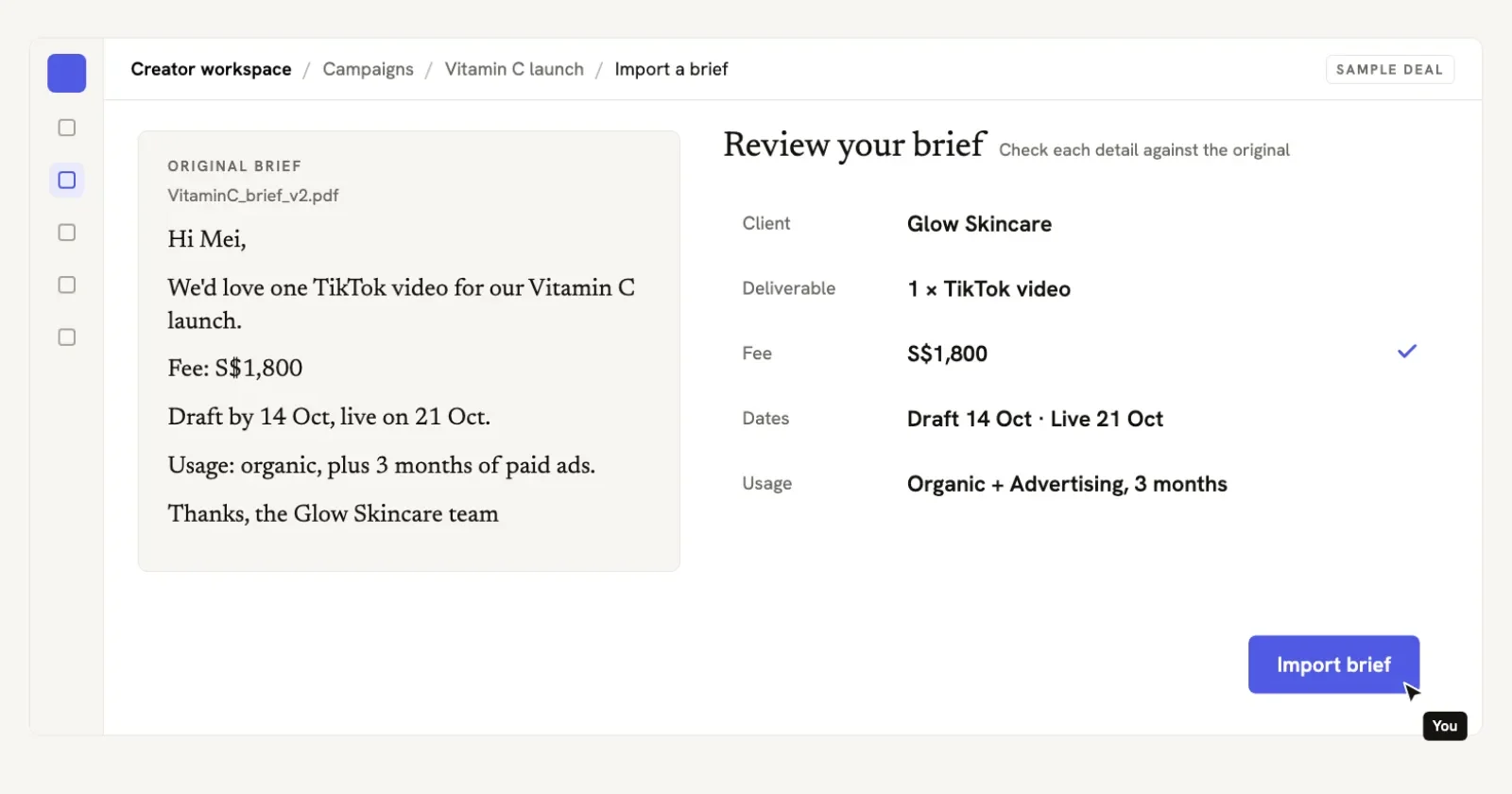
In The Creator List: the pasted brief on the left and, on the right, the client, the one TikTok video, the S$1,800 (about US$1,400) fee, the dates and the usage terms picked out for checking.
One action today: copy the message above, fill the brackets for the deal you are in, and send it before you film anything.
Common questions
A brand brief should answer twelve things: the goal of the video, the deliverables and their specs, the platform it runs on, the hook direction, the talking points, the do's and don'ts, a reference example, the dates, the usage rights, the number of revisions, the payment terms, and the person who approves the work. If any field is blank, that field is a question you send back before filming.
Send one message containing every missing field, not ten messages with one question each. Ten numbered questions is normal for a first brief and takes the brand two minutes to answer in writing. Splitting the questions across days makes the brand chase details, and answers given in a phone call with no written record count as answers nobody has.
Do not film before the brand answers the questions about money, deliverables, usage rights, dates and required claims. Those five mean the shoot cannot start, and filming around them is how a creator ends up reshooting for free. Hook direction and tone can be guessed at draft stage, as long as the draft is reviewed before the final cut and the go-live date.
Wait four working days, reply once in the same thread with the questions restated as a short numbered list, then stop. If there is still no reply, file the deal as unanswered and go back to pitching other brands. A brand that will not answer ten questions in writing will not answer a revision request or an invoice either.
Get paid for your audience. Know exactly what to charge.
A fair price, worked out for you, before the brand asks.
First deal not invoiced in 30 days? The founders sit with you until it is.
Try it free on your next deal14-day free trial · Cancel any time · We never take a commission
Read next
 Your First Brand Deal Step by Step, From Brief to PaymentEleven stages from brief to payment for a first paid deal, with the one action and the one forgotten detail at each stage.
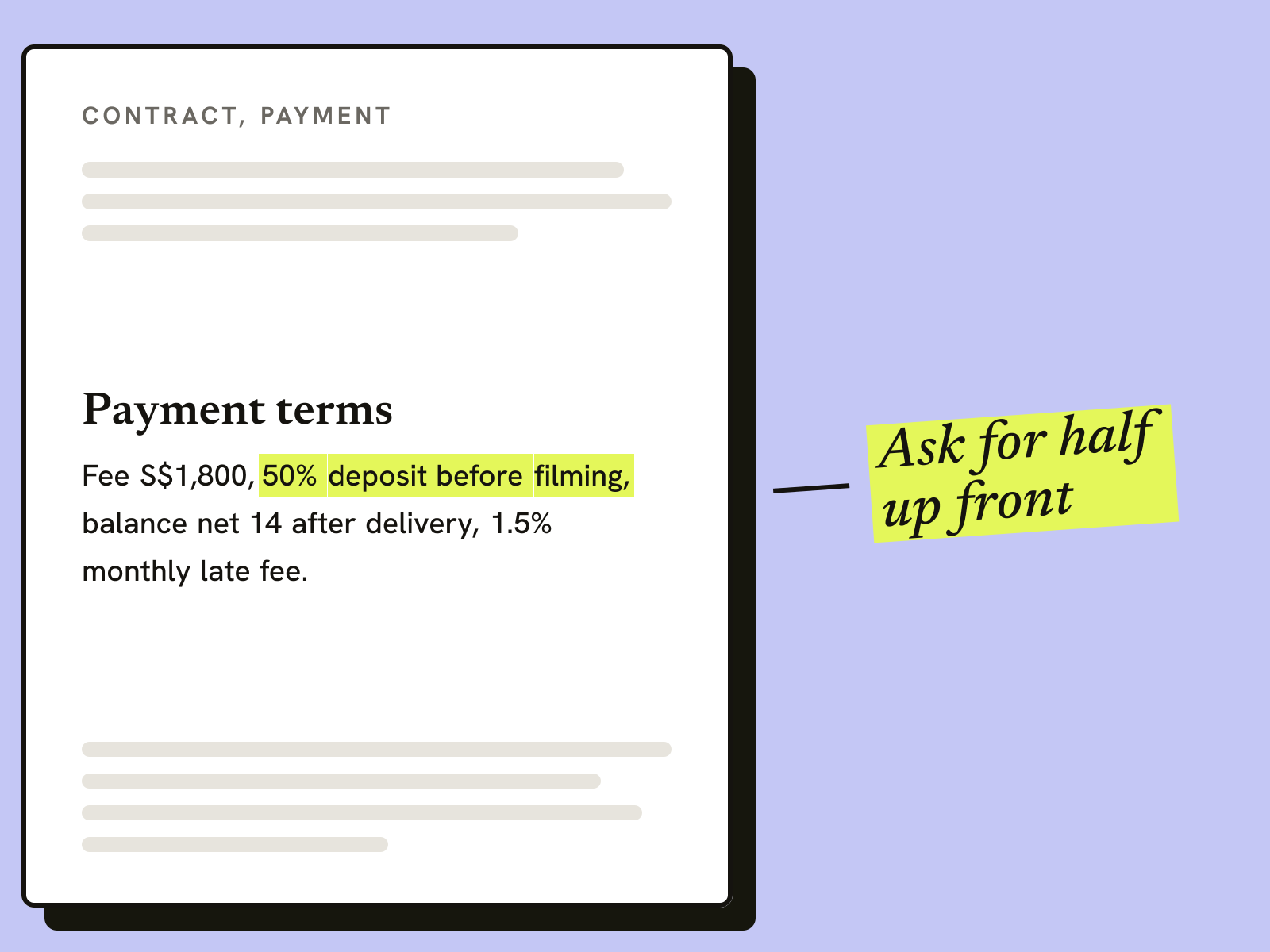 Brand Deal Contract Template for Creators (2026 Guide)A plain language brand deal contract template with six clauses that protect won deals, plus how to fill each field before work starts.
 Creator Deliverables Tracker for Brand Deals (2026)A per deliverable tracker with draft, revision, approval, publish date and live link rows plus handoff points for won deals.
 The Creator Paper Trail: From Brand Deal to Sign-OffA six-document checklist creators can run on every brand deal, from the first brief to sign-off, so payments land on time and disputes settle on evidence.