How Many Revisions Should a Brand Deal Include?
The standard number is two rounds, a round is one consolidated list of notes, and this is the line to put in the brief before you film.
 Written by Jack Evans7 min read

How many revisions should a brand deal include? Two is the standard: one structural pass and one polish pass, where a round means one consolidated list of feedback rather than a stream of comments. Write that number and that definition into the brief and the agreement, so a third round becomes a priced extra instead of free work.
On this page
- How many revisions should a brand deal include?
- What counts as one revision round?
- What is a tweak and what starts another round?
- How do you state the number so it holds?
- What exact line goes in the brief and the agreement?
- What should you say when the brand asks for a third round?
- What if the brief already says unlimited revisions?
How many revisions should a brand deal include? Two is the number most brands already expect, and it is the number you should be saying out loud before you film. Right now you probably have no number at all, so the notes arrive one at a time: a tweak after dinner, another the next morning, one last small change on Friday. Each is polite. None of it is free.
This guide gives you the standard number, the definition that stops a round turning into a month of notes, and the exact line to paste into your brief and your agreement today.
How many revisions should a brand deal include?
Two rounds. One structural round, where the brand reacts to the cut you delivered against the brief, and one polish round for wording, colour and trim. Anything past that is no longer a revision, it is a new piece of work.
The brand side already thinks this way. Standard influencer agreements include two rounds of revisions, with anything beyond that triggering an additional fee (Influencer Marketing Hub). The habit is not creator invented either: a Knak survey of more than 300 marketing leaders found that 69% of teams need two to three rounds of revision before work ships, and that getting approvals and sign-off was the top cause of missed launch dates, named by 47% of them (PR Newswire). So two rounds sits inside what the brand's own team already lives with every week.
One round is honest on a small job, such as a single quick video at US$200 or a gifted product with a fee attached. Unlimited is never honest, because nobody can price unlimited work, and a brand asking for it is asking you to absorb every change it has not thought of yet.
The number only protects you once the next question is settled: what exactly counts as a round.
What counts as one revision round?
A round is one consolidated feedback document. The brand watches the draft, gathers opinions from everyone who has one, and sends the whole list as a single message. That list is round one. One pass by you, one new cut, round closed.
It is not five notes across four days. Specifically:
- One message, one list. Every note for that draft, wherever it came from in their team, gathered into one message or one document.
- One version. Notes on the cut you actually sent, named by version. Notes on a link you retired yesterday begin the count again.
- A window. Give the brand a deadline for that list, usually two working days. Notes arriving after the window close are the next round.
- One pass by you. You action the whole list and send the next cut. That is what closes the round.
Five pings over four days is five rounds under this definition, which is exactly why the definition goes in writing instead of living in your head. An undefined round is the mechanism that turns a two-round deal into a month of unpaid edits.
What is a tweak and what starts another round?
Most arguments about revisions are really arguments about vocabulary. Settle the two categories before the first draft arrives.
- Correct a typo, swap a caption word, warm the colour, trim a second: inside the round.
- Reword a hook the brief already covered: inside the round.
- Rewrite the script from a different angle: new work.
- Reshoot because the product, claim or location changed: new work.
- A second cut in another aspect ratio for another platform: new work.
- Anything the brief never mentioned: new work.
The direction of the test matters. A revision fixes what the brief agreed; new work asks for something the brief never held. When you cannot tell, ask which line of the brief it comes from. The scope creep guide covers what happens when the answer is none of them, including how to price the extra without wrecking the relationship.
How do you state the number so it holds?
Five moves, in order, taking about ten minutes on the next brief you send.
-
Say the number in your first reply. When the brand sends a brief or asks your rate, put the fee and the rounds in the same message. A number stated early reads as professional. The same number stated after the first draft reads as a negotiation you are already behind in.
-
Define a round in the same sentence. "Two rounds included, each one a single consolidated list of notes." Without that clause, the brand hears two rounds and means two weeks of rolling comments.
-
Put the line in the brief. The brief is where the work gets counted, so the number belongs there, not only in an email. In The Creator List the brief carries a Feedback rounds control, with the guide beside it saying plainly that one or two rounds is common and unlimited rounds means unlimited work. A new brief starts at three, so if you agreed two, move it to two before you send it and the document matches the number you quoted. It is early-stage software for deals you already have, not a way to find new ones.
-
Repeat it in the agreement. The same workspace sends the agreement for signature from one private link, so the number sits in a signed document rather than a DM thread nobody searches again. If you are not using it, the brand deal contract template carries the clause-by-clause version of the same line.
-
Count rounds where the notes land. Keep every list with the deal, dated, so when one small change arrives in week three the count is on the page. The guide to keeping track of brand deals sets that up once and then it answers the argument for you.
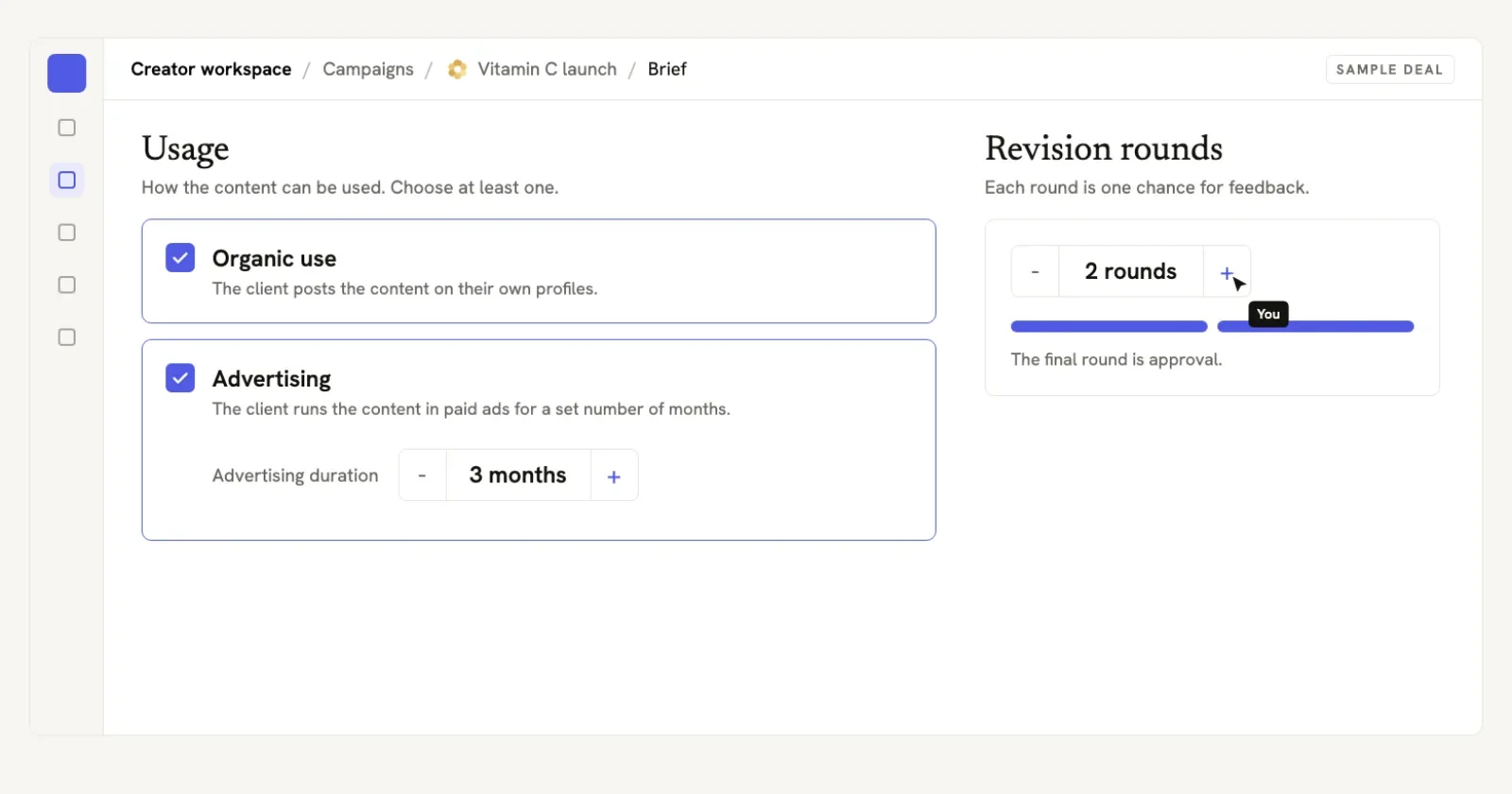
In The Creator List: the usage choices (organic, advertising and for how many months) beside a counter for revision rounds.
What exact line goes in the brief and the agreement?
Copy this into the brief, the contract, or the email that confirms the deal. Same words in all three is the point.
Revisions: Two (2) rounds included. A round is one consolidated list
of written feedback on the draft, sent in one message within two
working days of delivery. Notes arriving separately count as the
next round. Beyond the two included rounds, a new script, a reshoot
or a cut for another platform is quoted and approved in writing
before any of that work starts.
If there is no contract on this deal, send the same words as a message and ask for a one-word reply:
One line before I film: two revision rounds included, and a round
means one full list of notes in a single message, not notes trickling
in over a week. Anything past that, a new script or a second format,
I'll quote before I touch it. Reply yes and I'll start today.

More brand deals, paid what they're worth.
Pitch in your own words, sign before you film, stop doing extras free.
First deal not invoiced in 30 days? The founders sit with you until it is.
Try it free on your next deal14-day free trial · Cancel any time · We never take a commission
What should you say when the brand asks for a third round?
Say yes to the work and attach a number. You are not refusing anything, you are quoting something.
Happy to take this on. That's the third round, which sits outside
the two we agreed, so I price it at US$150 and it's back to you on
Thursday. Say the word and I'll send the updated invoice.
Two things make that message land. The price was visible in the original agreement, so it reads as administration rather than a squeeze, and it arrives with a date, so the brand can answer in one reply. The wider pattern to watch for, including what it means when a brand tests the line three times, is in the scope creep guide.
What if the brief already says unlimited revisions?
Counter it in one line before you accept, because once you start filming you are negotiating from inside the work.
All good, one fix needed on the brief: unlimited revisions won't
work for either of us. I include two rounds, each one full list of
notes, and I'll quote anything after that before I start it. Want
me to send the updated version?
If the brand will not name any number, put yours in the reply anyway and treat their silence as agreement to your terms, not as an open door. A brief that never gets a number will find one later, at your expense, and that is the pattern the whole growing phase turns on: the deal you won on the rate quietly pays for the changes nobody priced. If you would rather not be the one holding that line, whether a talent agency should handle negotiations is worth weighing up.
Your next action takes five minutes. Open the brief you are sending next, paste the scope line above, and set the rounds to two. That one edit is what turns the next one small change into a conversation about price instead of a favour. Once the rounds are agreed, a brand deal tracker app can keep the count beside the rest of the deal.
Common questions
Two revision rounds is the standard to agree in a brand deal: one structural round on the cut you delivered, one polish round for wording, colour and trim. A third round is a priced extra agreed before the work starts, and unlimited revisions is never a fair term because nobody can price unlimited work.
One revision round is one consolidated list of written feedback on a single version of the draft, sent in one message inside the agreed feedback window. Five notes spread across four days is five rounds by that definition, which is why the definition belongs in the written brief and not in memory.
A third revision round should be priced before filming and quoted before the work starts, as a fixed figure or a share of the original video fee. Naming the price in the original agreement turns the third round into administration rather than a negotiation, because the brand is confirming a number you both already read.
When a brief says unlimited revisions, reply with a counter before accepting: two rounds included, each one a single consolidated list of notes, with anything beyond that quoted and approved in writing first. A brand that will not name any number is asking you to absorb every future change, which is the deal worth declining.
More brand deals, paid what they're worth.
Pitch in your own words, sign before you film, stop doing extras free.
First deal not invoiced in 30 days? The founders sit with you until it is.
Try it free on your next deal14-day free trial · Cancel any time · We never take a commission
Read next
 Brand Deal Contract Template for Creators (2026 Guide)A plain language brand deal contract template with six clauses that protect won deals, plus how to fill each field before work starts.
 What Should Be in a Brand Brief: A Creator's ChecklistA checklist of the twelve fields a brand brief must answer before you film, and the copyable message that asks for the ones that are missing.
 Is This Brand Deal Offer Fair? A 4-Step Check for CreatorsA four-step check for any brand deal offer, with three worked examples and the maths shown, so you know whether to accept, counter or decline.
 Notion Brand Deal Tracker: Template Review and What It MissesAn honest review of the Notion brand deal tracker setup: what the template gets right, the four places it leaks money, and how to move your deals across in one afternoon.