How to Get Brand Deals on Instagram: A 5-Step System
A five-step system for winning Instagram brand deals: a profile that pitches itself, proof content in the brand's format, a short warm list and a pitch with a real number in it.
 Written by Jack Evans5 min read

How to get brand deals on Instagram comes down to five steps: a profile that shows brands what they are buying, a shortlist of brands already paying creators, proof in Instagram's own formats, a pitch with a real number in it, and a tracker from the first reply. None of it needs a follower milestone.
On this page
How to get brand deals on Instagram comes down to five steps: a profile that shows brands what they are buying, a shortlist of brands already paying creators, proof in Instagram's own formats, a pitch with a real number in it, and a tracker from the first reply. None of it needs a follower milestone.
A brand deal on Instagram is a paid agreement to make content that the brand can use on its own channels, and winning one is a small sales process rather than a lottery. The creators who land them are not the loudest. They make buying easy: a brand can see the format, the proof and the price without asking three questions. The five steps below do exactly that.
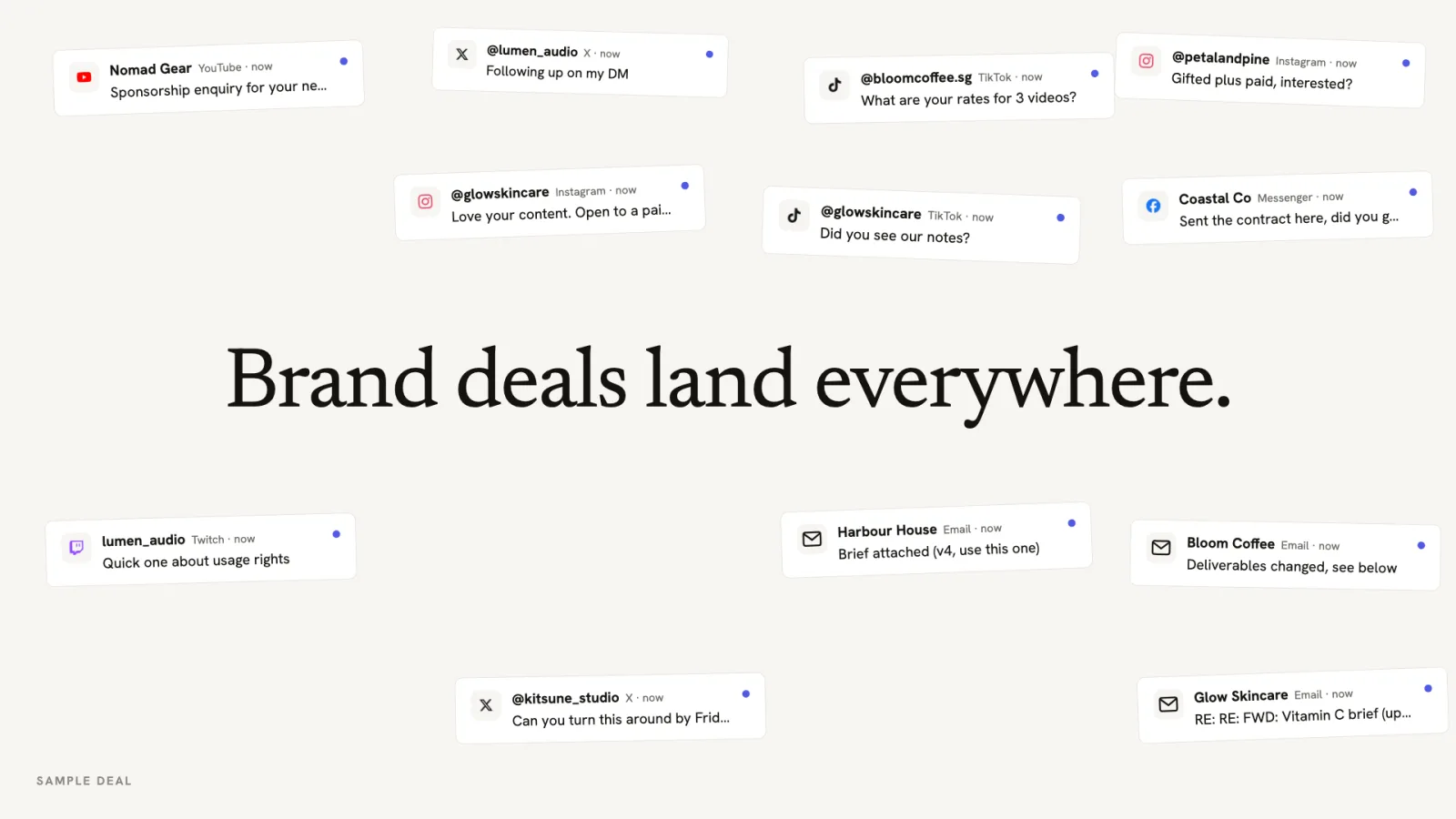
What the steps produce: conversations arriving direct, ready to be tracked from the first reply.
What do you need before you start pitching on Instagram?
Four things, all free, all finished before the first pitch goes out. Without them, replies die in your inbox.
- A public creator account. Switch to a creator or business category so brands can see reach and find a contact button.
- One bio line saying what you make and for whom. Not a joke, not a diary entry. "Skincare and slow fashion Reels for independent brands" tells a brand exactly where you slot in.
- Three posts that look like an ad for something. The format brands buy, published recently and pinned to the grid. This is your portfolio now.
- A rate you can say out loud. The Creator Rate Calculator gives you a starting number in your own currency, and the rate card guide shows how to present it as one link.
How to Get Brand Deals on Instagram, Step by Step
Five steps, in order. Skipping the first one is why most pitches get ignored.
-
Make the profile read like a pitch. Clean header photo, the bio line from the checklist, and a pinned post that shows your best work in the format brands buy. When a brand taps through from your message, the whole profile should answer: what you make, who it is for, and that you are open to brand work.
-
Find ten brands already paying creators on Instagram. Open a brand's profile and check the tagged tab: if other creators' posts sit there with a "Paid partnership" label, the brand has a budget and a process for this. The Meta Ad Library shows which brands are running Instagram ads right now, including ads run from a creator's handle. Start with products you already use; the new creator guide covers building the rest of the shortlist.
-
Publish the proof in Instagram's formats. Before you pitch, put up two or three Reels shot the way the brand's own ads look, then save the best Story frames to a Highlight called "Brand work" so a brand sees them without scrolling. If a brand you use already reposts customers, invite it to a Collab post on a Reel you made about its product: the post appears on both profiles, and the brand meets your work in its own feed. For which formats to make in the first place, see what to post to get brand deals.
-
Pitch with a number, a format and a date. One message: which post of theirs you liked, the format you would make (for example two Reels and three Story frames), your rate, and a delivery week. Structure for the message lives in the pitch guide. Send it to the email in the brand's bio, use Instagram's branded content tools so the paid partnership tag is set up correctly, and attach a simple signed agreement before filming: the contract template covers deliverables, revision rounds, usage rights and payment terms.
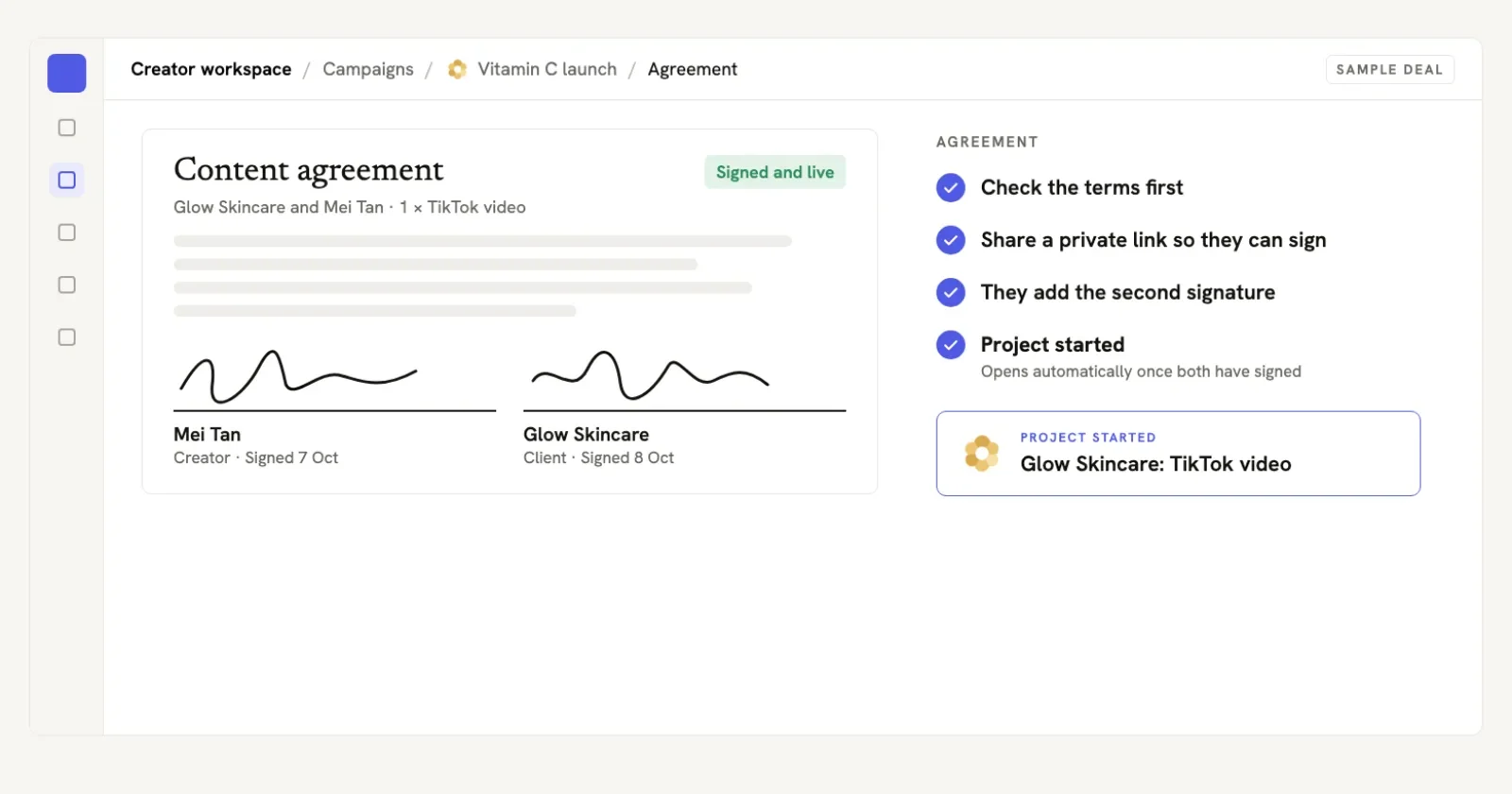
Pitch to signed: the agreement closes the gap between the yes and the invoice.
-
Follow up, then log the deal the day it lands. A DM from an account the brand does not follow lands in its message requests folder, so send the follow-up to the same email as the pitch. When the yes arrives, record the fee, the deliverables per format (Reel, Story frames, Collab post), the invoice date and whether the brand wants partnership ads, because that last one changes the fee. A row per deal in the brand deal tracker guide is enough at this stage.
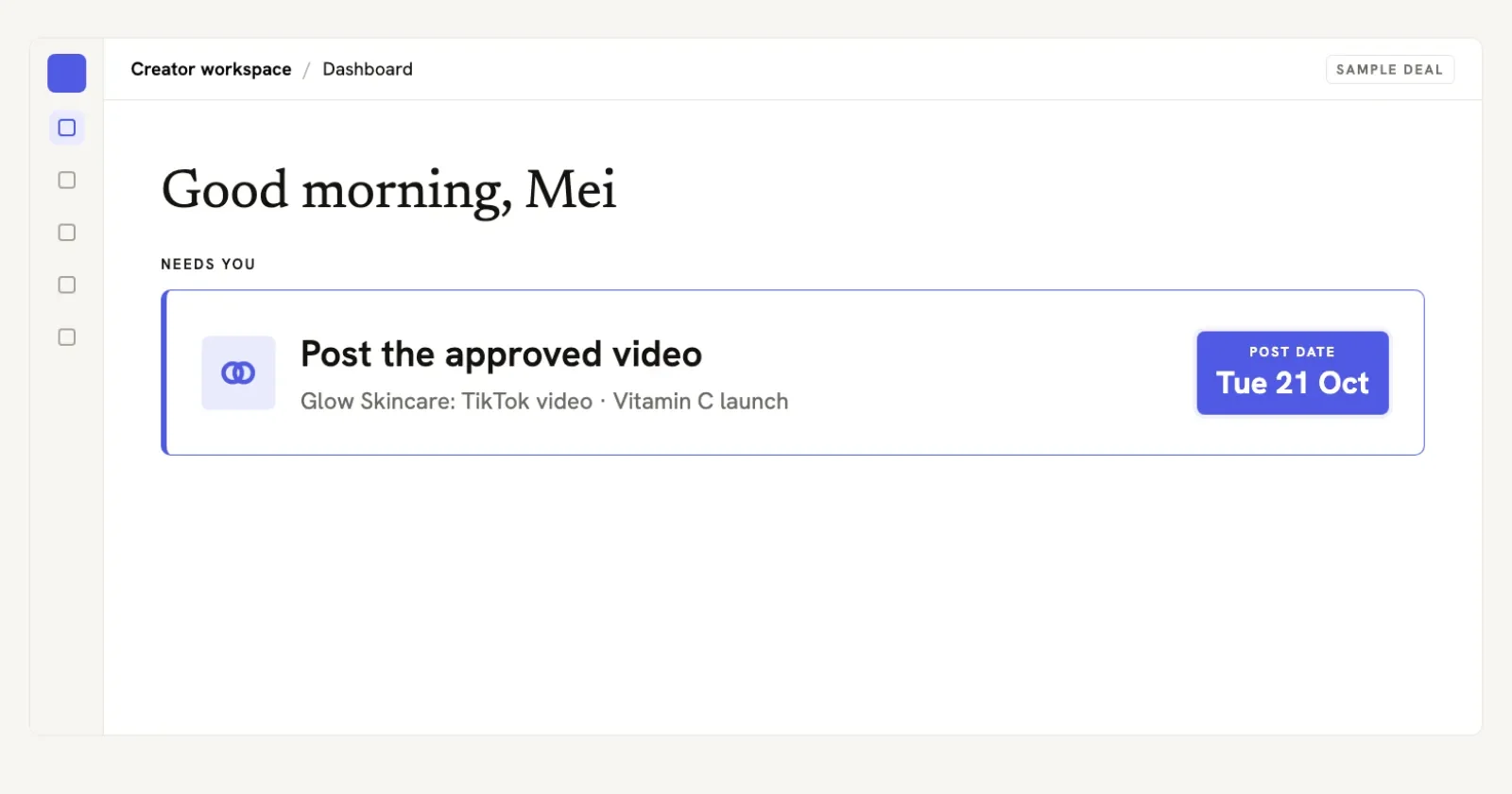
Tracking from the first reply means nothing waits on your memory.
What are the common mistakes to avoid?
The same four mistakes show up in almost every stalled account. However, all four are fixable before the first pitch goes out:
- Treating the profile as a diary. If a brand taps through and cannot tell what you make within five seconds, the pitch message does not matter. Everything on the grid should serve the work you want hired, instead of whatever you felt like posting that week.
- Copy-pasting the same DM to twenty brands. Brands recognise a template instantly. Ten messages that name one real post each outperform twenty identical ones.
- Quoting a rate before knowing usage. A number without usage terms is a number they will use against you. Partnership ads (often called whitelisting) are worth more than organic posts, so agree whether the brand wants paid usage before you finalise the fee. The usage rights guide shows what to charge for each.
- Posting sponsored work without the paid partnership label. Leaving the label off is a disclosure problem, and it also makes the post harder for the brand to reuse: the label is the usual route for a brand to run your post as a partnership ad. Add the brand as a partner every time, even on gifted work.

More deals. Less admin. Paid on time.
Every deal on one page, invoices out on time, reminders written for you.
First deal not invoiced in 30 days? The founders sit with you until it is.
Try it free on your next deal14-day free trial · Cancel any time · We never take a commission
When should you expect results?
Nothing here promises a deal by Friday. The profile, the Highlight and the tagged proof are built once; after that, each round of ten pitches only costs the messages. If a full round brings nothing back, the profile is usually the problem, not the pitch, so go back to step one before writing round two.
The wait does not end at the yes. Digiday reported in 2024 that influencer payment terms typically run 30 to 90 days after the work is done, and a 2022 Tipalti survey reported by Business Insider found 87% of creators had been paid late, paid the wrong amount, or not paid at all. The getting paid on time guide covers the invoice side. Working on TikTok too? The TikTok version of this guide covers Spark Ads codes and the Creator Marketplace.
Once Instagram deals overlap, with Reels in review for one brand and an invoice due for another, the creator tools page shows how a workspace keeps each deal's brief, agreement, drafts, approval and invoice on one record, with the client joining free from your link. Start with the 14-day free trial, then a monthly plan, with prices on the pricing page.
Common questions
Small creators win brand deals on Instagram by matching one format to one brand and showing proof of it. Brands buying Instagram content want a specific format: Reels in their niche, Stories with a link, a clean talking-head clip. A creator with 800 real followers in the right niche beats a large account in the wrong one, because the brand is buying the format and the audience fit, not the follower number.
The best way to approach a brand on Instagram is a short message that names one specific post of theirs, the format you would make, your rate, and when you could deliver. Send it to the email in the brand's bio rather than a DM where it scrolls away, and follow up after about five business days, then once more a week later. One clear message beats a friendly thread of three vague ones.
An Instagram brand deal pays by scope and usage, not by follower count. Indicative bands run about S$250 to S$500 per video for micro creators, S$600 to S$1,200 for established creators, and S$1,500 to S$10,000 for premium and KOL work, with paid-ad usage adding about 30%. A creator with a few thousand followers can still earn around S$800 when the format and usage justify it.
A first brand deal on Instagram takes weeks rather than days for most new pitchers: the profile has to be ready, the shortlist has to be real, and a brand may take a week to reply at all. Once the deal is agreed, payment terms commonly run 30 to 90 days after the work is done, so treat the whole path from first pitch to paid invoice as a one to three month project.
More deals. Less admin. Paid on time.
Every deal on one page, invoices out on time, reminders written for you.
First deal not invoiced in 30 days? The founders sit with you until it is.
Try it free on your next deal14-day free trial · Cancel any time · We never take a commission
Read next
 How to Get Brand Deals on TikTok: 5 Steps for CreatorsA five-step system for landing TikTok brand deals: a profile with pinned proof, brands already spending on the app, native content in their format, and a pitch a media buyer can act on.
 Is This Brand Deal Offer Fair? A 4-Step Check for CreatorsA four-step check for any brand deal offer, with three worked examples and the maths shown, so you know whether to accept, counter or decline.
 Your First Brand Deal Step by Step, From Brief to PaymentEleven stages from brief to payment for a first paid deal, with the one action and the one forgotten detail at each stage.
 Net 30 Meaning for Creators: When Brands Actually PayWhat net 30 means on a brand deal, when the 30 days start, whether net 60 or 90 is normal, how to ask for a deposit, and the payment line to put in your agreement.