UGC Usage Rights Cost: Pricing Ads on a First Deal
What UGC usage rights cost when a brand asks for ad rights or whitelisting on a first paid deal, with numbers to say out loud and a reply to copy.
 Written by Jack Evans7 min read

When a brand asks to run your video as an ad, UGC usage rights cost is priced on top of your content fee: 90 days of paid use around half that fee, whitelisting its own line, long windows closer to the full fee. Quote the extra before you film, not after.
On this page
- What does a brand mean when they ask to use your video in ads?
- Why does whitelisting cost more than ordinary paid ads?
- How much does UGC usage rights cost on a first deal?
- How do you price the extra without losing the first deal?
- When should you put usage in the first quote?
- What mistakes give the rights away for free?
- How do you keep the rights term on the record?
When a brand asks to run your video as an ad, UGC usage rights cost is priced on top of your content fee: 90 days of paid use around half that fee, whitelisting its own line, long windows closer to the full fee. Quote the extra before you film, not after.
What does a brand mean when they ask to use your video in ads?
You have a following, you have never been paid, and the first brand talking real money has just added a line: we will want to put paid behind this, or can we whitelist it. That question is not a red flag. It is the deal getting bigger.
Brands ask because creator content works as advertising. Meta ran an A/B test across roughly 2,400 advertisers and found that adding creator content as Partnership Ads cut cost per acquisition by 19% on average and lifted click-through rates 13% against business-as-usual creative, according to eMarketer. Aspire's State of Influencer Marketing 2026 survey of nearly 900 marketers and creators found 77% of brands repurpose creator content in paid ads, and 67% write paid usage into the first contract. Influencer Marketing Hub's statistics roundup reports the same pattern from the brand side: Linqia found 81% of enterprise marketers say creator content beats brand-made assets, and every one of them reuses it beyond the original post (Influencer Marketing Hub).
So the ask is normal, and it is a second purchase. Your content fee pays for the video. The licence pays for distribution. Three different asks arrive under the same friendly sentence:
- Organic posting. The brand posts your video on its own feed. The cheapest right, often bundled.
- Paid ads from the brand's handle. The brand runs your video as an advertisement from its account. Medium right, always priced.
- Whitelisting, also called Spark Ads or Partnership Ads. The brand runs the ad from your handle, with your name on it. The biggest right, always its own line.
Why does whitelisting cost more than ordinary paid ads?
Ordinary paid ads use your footage. Whitelisting uses your account. The ad appears to come from you, borrows the trust your audience has in you, and sits on your handle while the brand pays to distribute it.
That is a bigger favour than handing over a file, and the performance data backs the price. Meta's tests on Partnership Ads, which run under a creator handle, are the reason brands ask for this format in the first place. They are not asking for a freebie by accident. They are asking for their best-performing creative format, and they have budget for it.
Price whitelisting at the paid ads rate for the same window, then renew it separately. Never fold it into organic, and never throw it in to close the deal. A brand that gets whitelisting free on deal one will expect it free on deal two.
How much does UGC usage rights cost on a first deal?
Work the example in dollars first. A US$300 video is a normal first paid deal for a creator with an audience and no past brands, and every number below is a line you can say out loud on that deal:
- Organic posting, 12 months, TikTok and Instagram. Included in the US$300, or +US$75 if you want a simple first quote with the licence visible.
- Paid ads, 90 days, from the brand's handle. +US$150. Half the content fee, which is where most first brands land.
- Paid ads, 12 months, from the brand's handle. +US$300. A year of paid use on one video typically doubles the deal.
- Whitelisting or Spark Ads, 90 days. +US$150, its own line at the paid rate for the same window.
- Unlimited buyout. US$600 as a one off, because the brand ends every future renewal. Most first-time creators steer brands to a 12 month term instead.
- Category exclusivity, 60 days. +US$100 if the brand wants you off competing products during the window.
Those dollars follow the usual percentage ladder brands expect. For the general bands and how they scale with your own fee, see the usage rights guide.
A US$300 video with 90 days of paid ads is a US$450 deal. The same video with paid ads and whitelisting is US$600. One sentence from the brand moved the price by half, and the only thing that captures it is a separate line on the quote.
If you do not have a content fee yet, the Creator Rate Calculator gives you a starting number in your own currency. Percentages only work once you have a fee to take them off. For the content fee itself, how much to charge for your first brand deal with no past deals works through the starting number.
How do you price the extra without losing the first deal?
Five steps. The last one is a message you can copy.
-
Confirm which right they want. One short line back: just to confirm, do you want to post it organically, run it as a paid ad from your account, or run ads from my handle? Most brands reply with one of the three. You cannot price an ask you have not named.
-
Price each right as its own line. Content fee first, then licence lines under it with the window attached. Never one bundled total. A brand reading three small lines negotiates those lines. A brand reading one big number negotiates the whole deal down.
-
Say the number the same day. Not in a call, not next week, in writing before the conversation goes cold. Here is the reply:
Hey Sam,

Good to hear the video works for paid. The content fee stays at
US$300: filming and one round of edits.

Running it as an ad is a separate licence. Ninety days of paid use
on TikTok and Instagram from your handle is US$150 on top.

If you want it running from my handle as a Spark Ad, that is a
further US$150 for the same window, because it is my account and
my name on the ad.

Total with both: US$600. Happy to start with the 90 day window and
renew when it ends if it performs.

[Your name]
That message does four things. It keeps the agreed fee untouched. It names each right in plain words. It attaches a number to each window. And it offers the shorter window as the easy yes, which is how brands with small test budgets actually buy.
-
Put the term in writing before you film. Platforms, window, end date, and whether paid and whitelisting are included. The brand deal contract template has the clause in plain English. A conversation is not a licence. A signed line is.
-
Invoice the licence as its own line. When the invoice goes out, the content fee and the usage fee are two rows, not one. Finance teams pay itemised invoices faster, and you have proof of what was bought if the brand later claims the video was bought outright.
When should you put usage in the first quote?
Before the brand asks, every time. A rate card with three standing lines kills the awkward moment entirely:
- content fee, one video, one revision round
- paid ads usage, 90 days, from the brand's handle
- whitelisting, 90 days, from your handle
Brands pick from the card instead of discovering the extras mid-deal. You stop improvising numbers under pressure, which is where first-time creators quote too low. The rate card guide shows the layout, and The Creator List can hold your rate card, so check which lines it includes before you share it and the numbers exist before the conversation starts.
If the brand is already mid-email and has just asked for ads, skip the card and send the reply above. The card is for deal two. The reply is for right now. If you are deciding what format that card should take, Beacons media kit vs rate card shows which one brands actually open.

Get paid for your audience. Know exactly what to charge.
A fair price, worked out for you, before the brand asks.
First deal not invoiced in 30 days? The founders sit with you until it is.
Try it free on your next deal14-day free trial · Cancel any time · We never take a commission
What mistakes give the rights away for free?
- "Sure, no problem" on the ad request. The four most expensive words on a first deal.
- Bundling the licence into the content fee. One total hides the renewal value and teaches the brand one price for everything.
- No end date. A licence without an end date is a buyout sold at term prices. Every window gets a calendar end.
- Free whitelisting to seem professional. Professional is a number with a window attached, not an open door to your handle.
- Unlimited usage at term prices. If the brand wants forever, price forever at 150 to 300 percent, or send them back to a 12 month term.
- Saying yes and working out the number later. Later is when you have no room to negotiate. Before filming is when you still have the video they want.
The full pricing ladder for renewals, multi-year terms and expiry tracking lives in the usage rights guide. This article is the first ask. That one is the ongoing account.
How do you keep the rights term on the record?
A rights term is a date with money attached: platforms, window, end date, fee. It belongs in the agreement the client signs, not in a DM thread you will scroll past.
The Creator List is a private workspace for brand deals you already have. Paste or import the brief, put the licence lines in an agreement the client signs from one private link, and keep the end date beside the deliverables and the invoice. It is in early beta, registration is open to creators, and it is not a marketplace: no hiring, no booking, no commission on what brands pay you. If you would rather keep the term in a spreadsheet, use the deal tracking guide and diary the expiry yourself. Either way, the term exists in writing before the video ships.
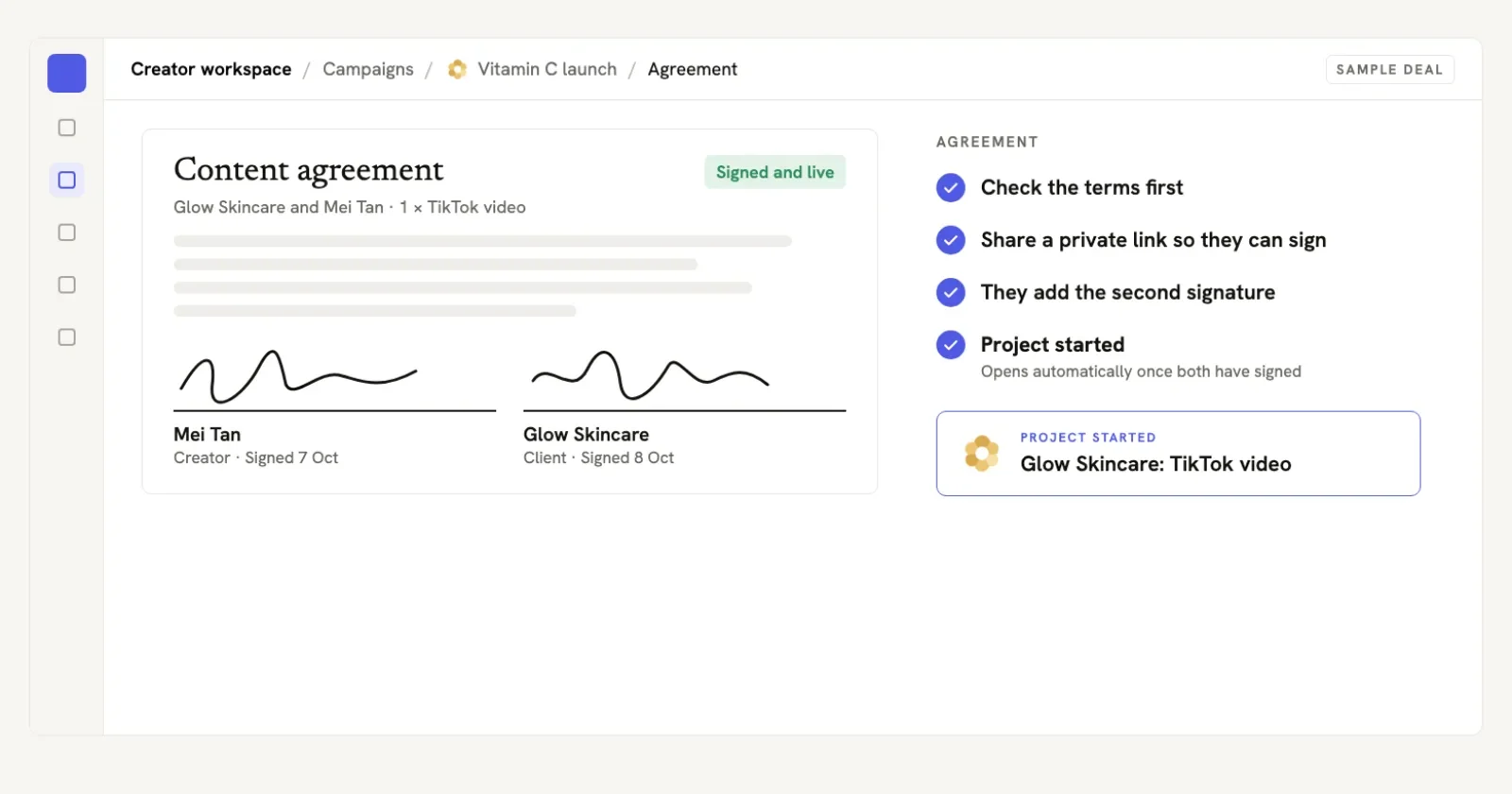
In The Creator List: an agreement signed by both sides from a private link, with the project opening automatically once the second signature is in.
Common questions
On a first paid deal, price usage as a share of the content fee. With a US$300 video, 90 days of paid ads from the brand's handle adds around US$150, a 12 month paid window adds US$250 to US$350, and 12 months of organic posting adds around US$75 or sits inside the fee. Whitelisting is quoted as its own line at the paid rate for the same window.
Paid ads rights let a brand run your finished video as an advertisement from the brand's own account. Whitelisting lets the brand run that ad from your handle, using your name and your audience relationship. Whitelisting borrows your identity as well as your footage, so it costs more and always sits on its own line in the quote.
Yes. A first-time paid creator charges for usage rights the same way an experienced creator does, as a separate line beside the content fee. The content fee pays for filming and editing. The licence pays for where the brand runs the video and for how long. Saying yes to ads for free on deal one teaches the brand that the extras are free.
Do not reopen the video fee. State that ads are a separate licence, name the window, and send the extra number the same day. A message such as: happy to add paid ads, the content fee stays US$300, 90 days of paid use is US$150 on top, total US$450. Pricing the extra as an addition keeps the agreed fee intact and the deal moving.
Get paid for your audience. Know exactly what to charge.
A fair price, worked out for you, before the brand asks.
First deal not invoiced in 30 days? The founders sit with you until it is.
Try it free on your next deal14-day free trial · Cancel any time · We never take a commission
Read next
 How Much to Charge for Whitelisting: Spark and Partnership AdsWhat to charge when a brand asks to whitelist your video, send a Spark Ads code or get partnership ad access, with the price by window, the clause and a reply to copy.
 How Much Do Influencers Charge in Malaysia? 2026 GuideIndicative RM benchmarks from published sources, the difference between reach and content, and a scope checklist for comparing Malaysian creator quotes.
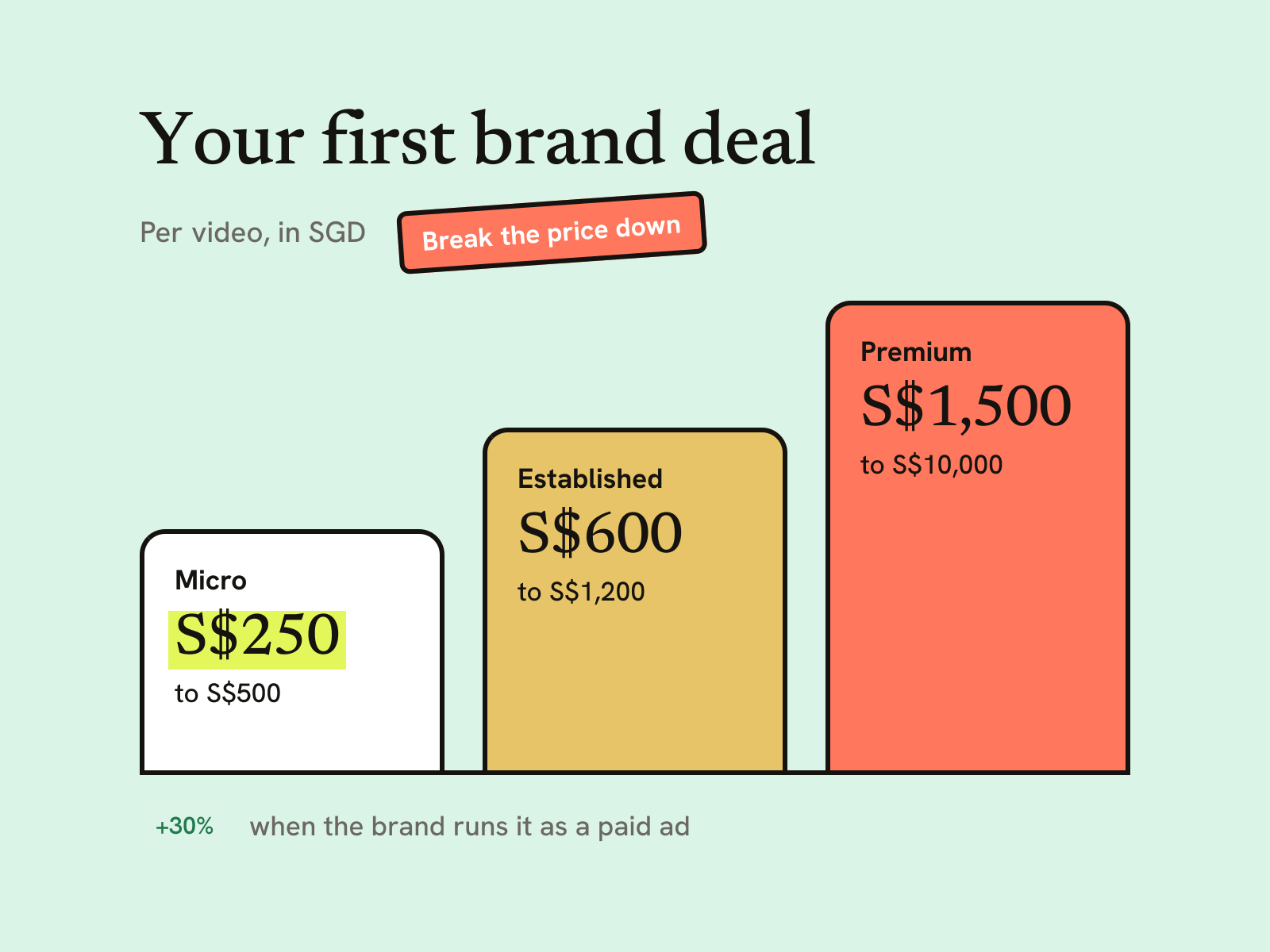 How Much to Charge for Your First Brand Deal With No Past DealsThe first-deal moment: what to quote with zero paid work behind you, how to frame a first brand deal price without undercutting yourself, and the exact message to send.
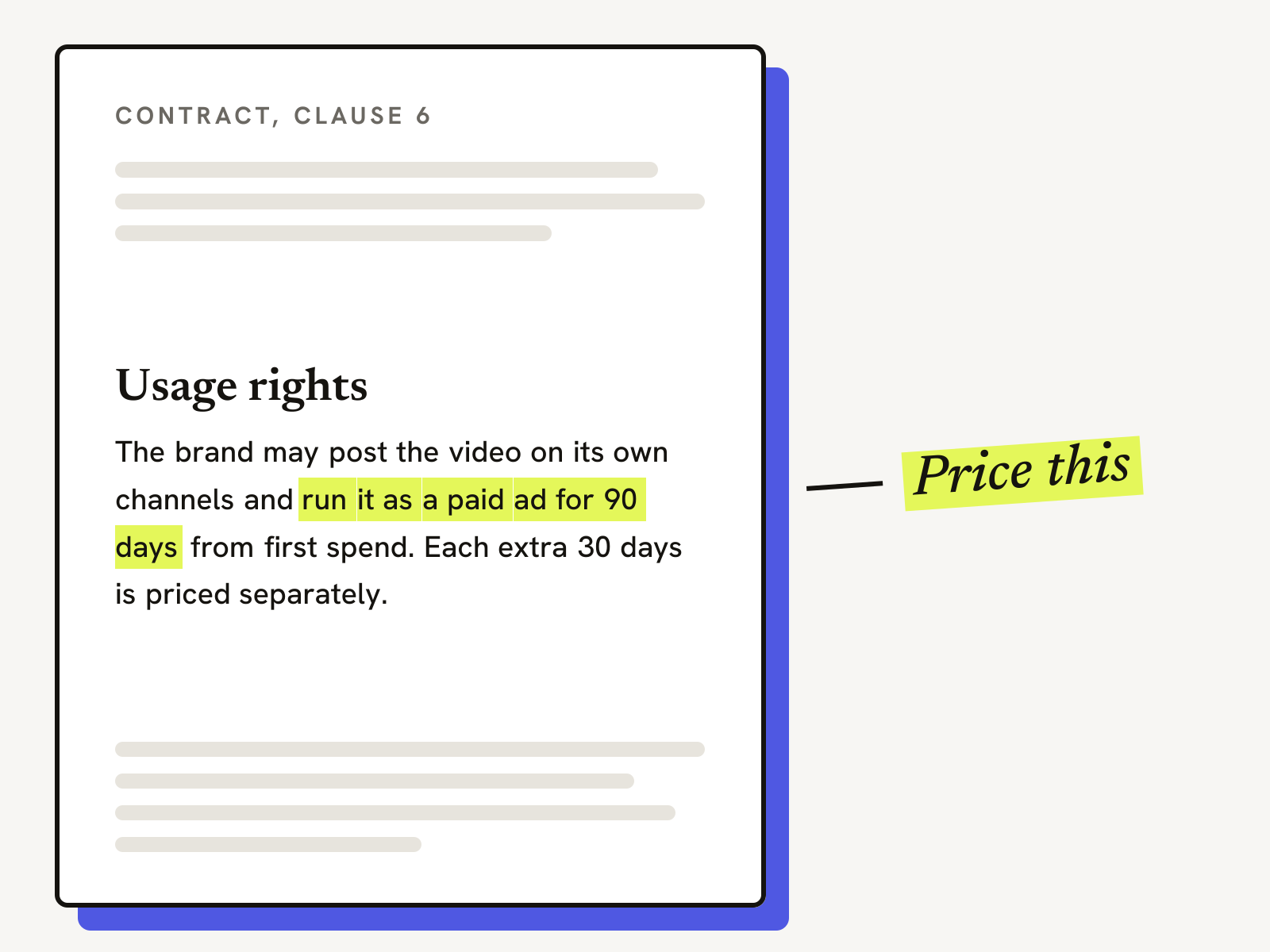 Usage Rights for Creators: Price and Renew (2026)A creator guide to pricing usage rights on won deals: standard terms, renewal maths, whitelisting upsells and unlimited usage fees.