What to Say When a Brand Asks Your Rate: 3 Copyable Replies
Three copyable replies for the moment a brand asks what you charge: the rate card reply, the ask-for-the-brief reply, and the reply when they named a budget.
 Written by Jack Evans7 min read

What to say when a brand asks your rate depends on what they sent: your rate card if you have one, a request for the brief if you do not, or a confirmation of what their stated budget buys. Pick by situation and send it the same day.
On this page
What to say when a brand asks your rate depends on what they sent: your rate card if you have one, a request for the brief if you do not, or a confirmation of what their stated budget buys. Pick by situation and send it the same day.
A rate reply is a short message you send back when a brand asks what you charge. Yours has just landed as a DM from a brand you like: a compliment, then the question. You have never priced anything. You do not know whether to send a number, ask what they need, or dig out a rate card you are not sure is finished, so the message sits unread while you work out how to sound like someone who does this every week.
This guide covers one moment only: the reply you send after the brand asks. It is not a guide to building a rate card, and it is not a negotiation playbook for what happens after they counter. Those are separate jobs. Every money example is in USD and current as of 2026. What follows is the wording for three situations, and the order to check them in.
What to say when a brand asks your rate?
The answer depends on what is already sitting in front of you. Three things can be true when the question arrives, and each one gets a different reply.
- You have a rate card ready. You know your number, you know what it buys, and you can send it as a link. Send the rate card reply.
- They asked before sending any brief. No deliverables, no dates, no mention of usage. Ask for the brief so the price describes real work, then price it the same day.
- They gave you a budget range. A figure with strings attached, such as "we have US$240 for two videos". Confirm what that money buys instead of negotiating against yourself.
One rule runs through all three: answer the question that was actually asked, in the channel it arrived in, on the day it arrived. None of these replies guarantees the brand says yes. They do guarantee you stop stalling, which is the part that currently costs you deals.
How do you pick the right reply in under a minute?
Five steps, in order. The whole decision takes less time than reading this section.
-
Look for a number in their message
If they wrote "we have US$240 for two videos", that is the third case. A named budget is the most useful thing a brand can send you, because it turns your job from guessing a price into confirming a scope. Use the budget reply.
-
Check whether you can name a price you would defend
If you have a rate card, or a figure you have already worked out and would be happy to repeat next month, use the rate card reply. If the number in your head was invented ten seconds ago, do not send it. A made-up figure becomes the anchor for every message that follows.
-
Ask for the brief when there is nothing to quote from
No card, no past work priced, no idea what they want. Ask for deliverables, usage, dates and revision expectations, and commit to a price the same day you get them. Asking for the brief is not stalling: it is how you avoid quoting a number that blows up halfway through production. The scope creep guide covers what happens when the brief arrives thin.
-
Send it today
Speed matters more than polish here. Harvard Business Review research on inbound queries found that companies contacting a prospect within an hour were nearly seven times as likely to qualify the lead as those that waited an hour longer (Harvard Business Review). A brand asking a rate question is still sitting at the table with the thread open. A creator who answers tomorrow is answering a conversation that already moved.
-
Log the thread and follow up once
Write down the brand, the date, which of the three replies you sent, and the number you named. Four working days later, reply in the same thread with one new detail: a second example, a tighter turnaround, a clarified line of scope. The one row per deal system works for rate threads too.
How do you reply when your rate card is ready?
This is the easiest case and the one most people overthink. The brand asked a direct question, so give a direct answer: the number, what it buys, the extras priced separately, then one easy question. Replace every bracket before you send.
Hi [Name], thanks for asking. One 30-second video is $120: one concept, one round of revisions, delivery within seven days, and posting on your own channels. My full rate card is here: [rate card link]. It prices extra hooks, rush delivery and paid usage as separate lines. Want me to send a short brief form so we can lock the details?
Four things this reply does. It names a real number. It says what the number buys. It prices the next likely asks before they make them, so the follow-up becomes a yes or no. It ends with a question a busy marketer can answer in one line.
If your rate card does not exist yet, that is a ten minute job, not a reason to stall. The rate card guide turns one number into a one-pager, and the Creator Rate Calculator gives you a starting figure in your own currency. A rate card inside The Creator List is one link you paste straight into the reply, with usage and exclusivity already listed as separate lines in any currency. There is a 14-day free trial, then a monthly plan on the pricing page.
How do you reply when you want the brief first?
Never quote from nothing. Scope is what the price hangs on: number of videos, length, where they run, how many revisions, when it is due. Ask for those, and put a deadline on your own answer so the question does not read as a dodge.
Hi [Name], I would like to price this properly rather than guess. Quick questions: how many videos, what length, where will they run (your own channels only, or paid ads as well), and what date do you need them? Send the brief over and I will come back with a price the same day.
Notice what is missing: "what is your budget?" as your only reply. You have just answered a question with a question, so you owe them a timeline, and the timeline is what makes the question land as diligence rather than hesitation.
Some brands push back and want a number immediately. Give them a starting figure and say plainly that it moves with scope: "For work like this I start at $120 per video for organic use. Once I see the brief I will give you an exact number." You have given an anchor without committing to a price for work you have not seen.
How do you reply when they have given a budget?
Treat the budget as a scope question, not a verdict on your worth. Three branches, one shape: thank them, name what the money buys, ask one question.
The budget fits.
Thanks, that helps. US$240 for two 30-second videos works for me: one concept each, one round of revisions, delivery within seven days, posting on your channels. Paid usage would be priced separately if you want to use them as ads. Want me to send a short agreement so we can lock it in?
The budget is low. Shrink the scope to fit the money instead of discounting the scope they asked for.
Thanks for being straight about the number. US$120 covers one 30-second video: one concept, one round of revisions, delivery within seven days, posting on your channels. Two videos at that scope are US$240. Which version should I send over?
The budget is generous. Do not undercut yourself and do not volunteer a discount. Confirm the scope the money buys and move to paperwork. A budget above your rate is information about their priorities, not a mistake you need to correct.
Whichever branch you take, end on one question so the next message is theirs. If the rate question arrived in a cold DM and you are still working out the first exchange, how to reply to a brand collab DM walks through the steps before the number comes up.

Get paid for your audience. Know exactly what to charge.
A fair price, worked out for you, before the brand asks.
First deal not invoiced in 30 days? The founders sit with you until it is.
Try it free on your next deal14-day free trial · Cancel any time · We never take a commission
What should you never say when a brand asks your rate?
Some replies lose the thread before the brand has read them. Skip these:
- "It depends" with nothing after it. A reply that names no scope and no number is a dead end. If it depends, say what it depends on and ask the question.
- "What is your budget?" as your only line. Fair to ask, but not as an answer to their question. Ask it after you have given something, or after you have asked for the brief.
- A number you made up on the spot. Say the same number every time. Inconsistency is what makes a brand negotiate hard, because they can feel the wobble.
- "My rates are negotiable." Volunteer nothing. If they counter, you can move on scope, usage or timeline.
- An apology before the number. "Sorry, I am not sure about my rates, but..." tells them the figure is provisional, so they will treat it as one.
There is a research reason to lead with a clear number instead of a shrug. Across three experiments, whichever party made the first offer ended up with the better outcome, and first offers strongly predicted where the price finally landed (Galinsky and Mussweiler, Journal of Personality and Social Psychology). How extreme that opening number is often explains more than 50% of where the final price ends up (Oesch and Galinsky, First Offers in Negotiations). A specific first number sets the frame for the whole conversation. A vague one hands that frame to the brand.
One action today: open the last rate question sitting in your DMs, pick the reply that matches what they sent, fill every bracket, and send it before you close the tab.
Common questions
Answer the rate question that was asked, in the same channel, the same day. Send your rate card if you have one, ask for the brief if you do not have a price you would defend, or confirm what the brand's budget buys if they named a number. Pick the reply that matches what is already in front of you and send it before the thread goes cold.
A creator gives a number when a defensible price already exists, such as a finished rate card. A creator asks for the brief first when there is nothing to quote from, because a price without deliverables, usage and dates is a guess that turns into an argument later. Asking for the brief comes with a promise to price the same day.
Confirm what the budget buys rather than reacting to the number. A reply such as 'US$240 for two 30-second videos works for me: one concept each, one revision, seven-day delivery, posting on your channels' names the scope in exchange for the money. If the range is too low, shrink the scope to fit it instead of discounting the original scope.
Reply the same day, ideally within the hour the message arrives. Harvard Business Review research on inbound queries found that companies contacting a prospect within an hour were nearly seven times as likely to qualify the lead as those that waited an hour longer. Speed does not win the deal, but a slow reply loses the thread.
Get paid for your audience. Know exactly what to charge.
A fair price, worked out for you, before the brand asks.
First deal not invoiced in 30 days? The founders sit with you until it is.
Try it free on your next deal14-day free trial · Cancel any time · We never take a commission
Read next
 Brand Deal Rates for 10k Followers: What to ChargeWhat to charge for a brand deal at about 10k followers: the band to start from, the seven things that move you inside it, a worked example and a message to send.
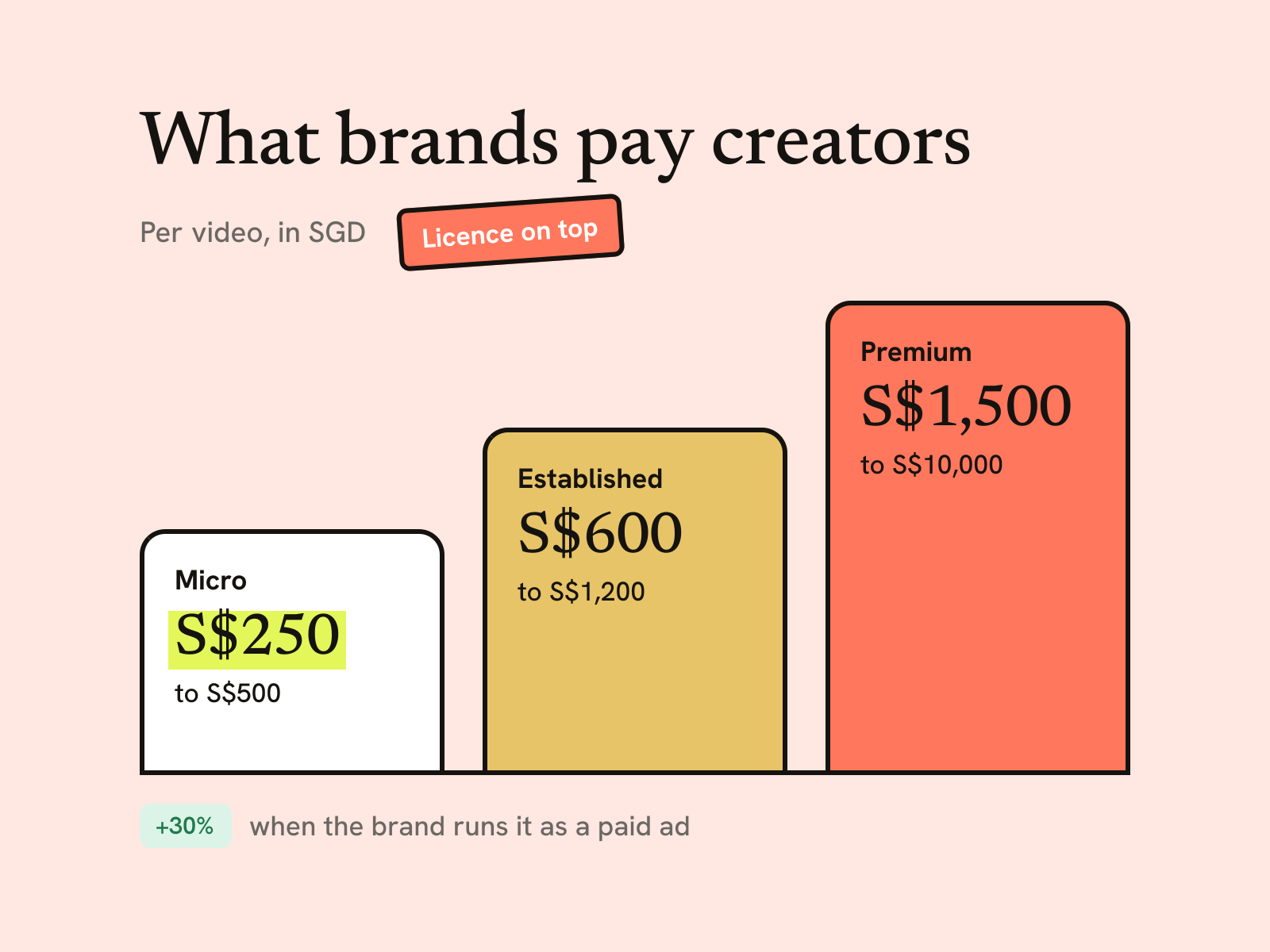 How Much Do Brands Pay Creators in 2026? A Rate GuideWhat the published 2026 benchmarks say brands pay across UGC videos, sponsored posts, whitelisting and retainers, and how to place your own number inside them.
 The First Message to Send a Brand: 2 Copyable VersionsTwo copyable first messages for a new UGC creator, taken line by line, one for a cold brand and one for a brand that already follows you.
 Net 30 Meaning for Creators: When Brands Actually PayWhat net 30 means on a brand deal, when the 30 days start, whether net 60 or 90 is normal, how to ask for a deposit, and the payment line to put in your agreement.